
A court isn’t just a surface. It’s a place where movement, community, and identity show up at the same time. The visuals and the way people move across it contribute to something larger than the game itself. You see what happens on the court, but the role design plays in shaping the space often isn’t considered.
Most courts are treated as functional. They’re built to meet standards and exist without getting in the way. But even in that neutrality, they’re still communicating. When that layer isn’t considered, what shows up is still an identity — just one that reflects a lack of connection to the people using it.
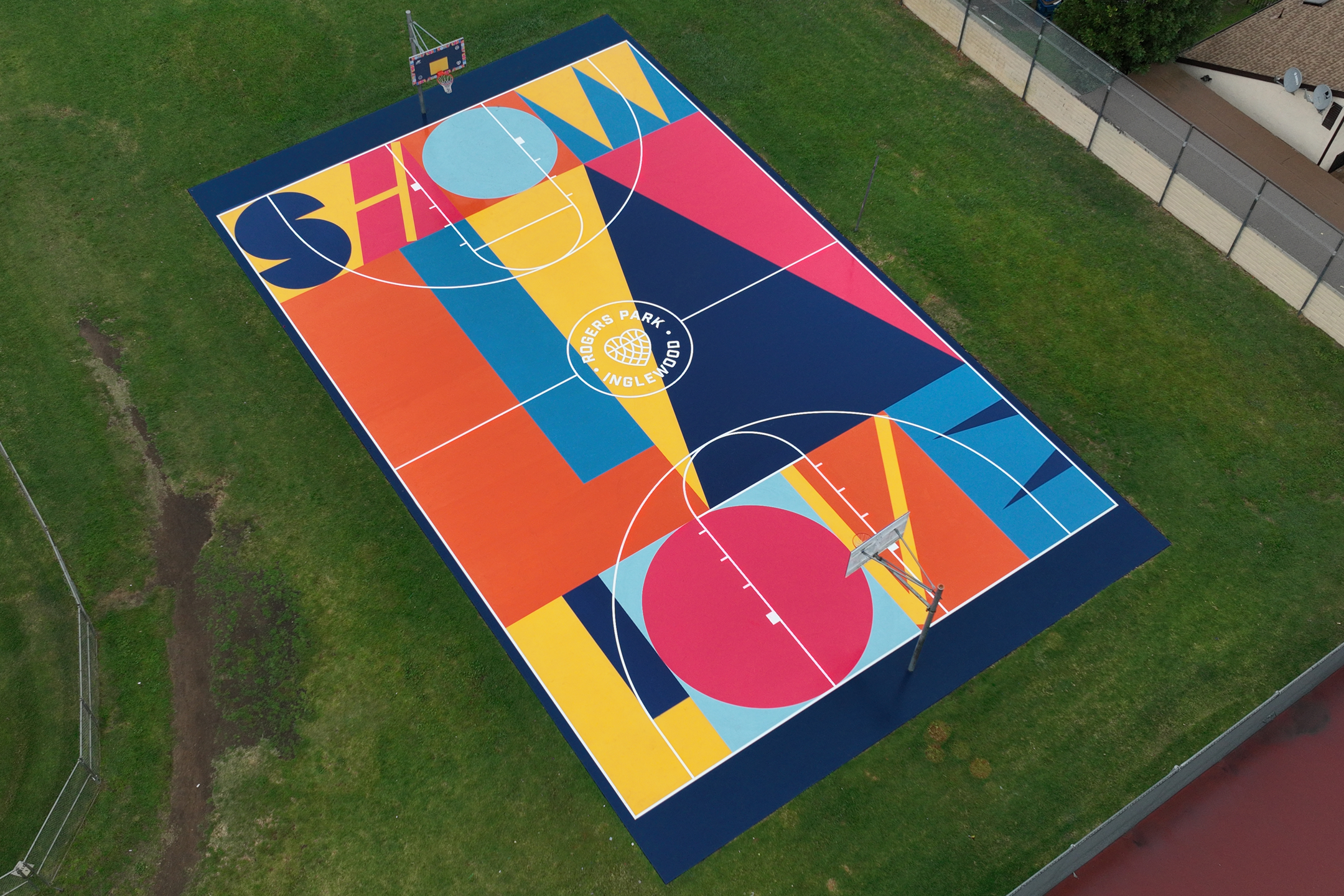
When that layer is considered with purpose, the court shifts. It stops being just a place to play and becomes something people recognize, return to, and take ownership of. It becomes part of the identity of the space and the people who use it.
The Court is Not Neutral
A court is never just a backdrop. At its most basic, it’s already shaping how people move, how long they stay, and how the space feels. The dimensions, spacing, and orientation influence behavior in ways that often go unnoticed.
Most of the time, that influence is unintentional. Standard layouts and minimal consideration beyond function create spaces that work, but don’t say much. They hold activity without adding to it. They don’t invite, they don’t push, they don’t reflect anything back to the people using them.
But the moment you start to consider those elements as part of the experience, the role of the court changes. It becomes something that can direct energy, create rhythm, and give the space a distinct presence.
Form, Language, and Authorship
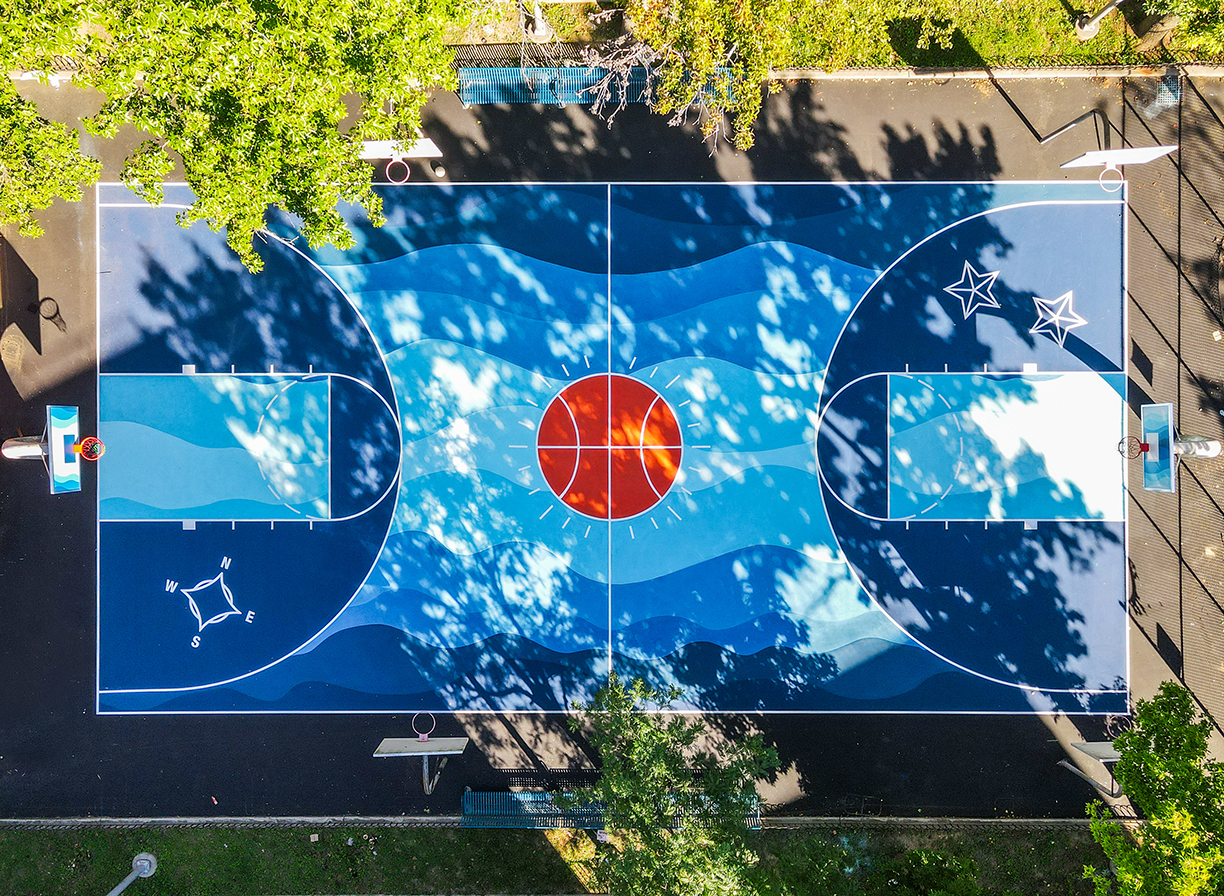
Many of my court designs come out of a consistent visual language — simple shapes, movement, contrast, and a sense of play. It’s not about decorating a surface. It’s about bringing a point of view into the space.
Without that, courts can quickly become generic. Color gets added, lines get layered on, but there’s nothing holding it together. What I’m interested in is something more cohesive, where the forms carry a feeling and the court reads as part of a larger language, not a one-off design.
That language doesn’t stay on the ground. It carries into the experience and into things like apparel, backboards, and signs, becoming part of how the space shows up and how people see themselves within it.
When the balance is right, a court feels intentional without feeling imposed. It has a point of view, but remains open, something people can make their own without losing clarity in the work.
Community Input and Interpretation
The process doesn’t start and end with the designer. Community input is part of the work — through workshops, conversations, and observing how people already use the space. But it’s not about placing ideas directly onto the court.
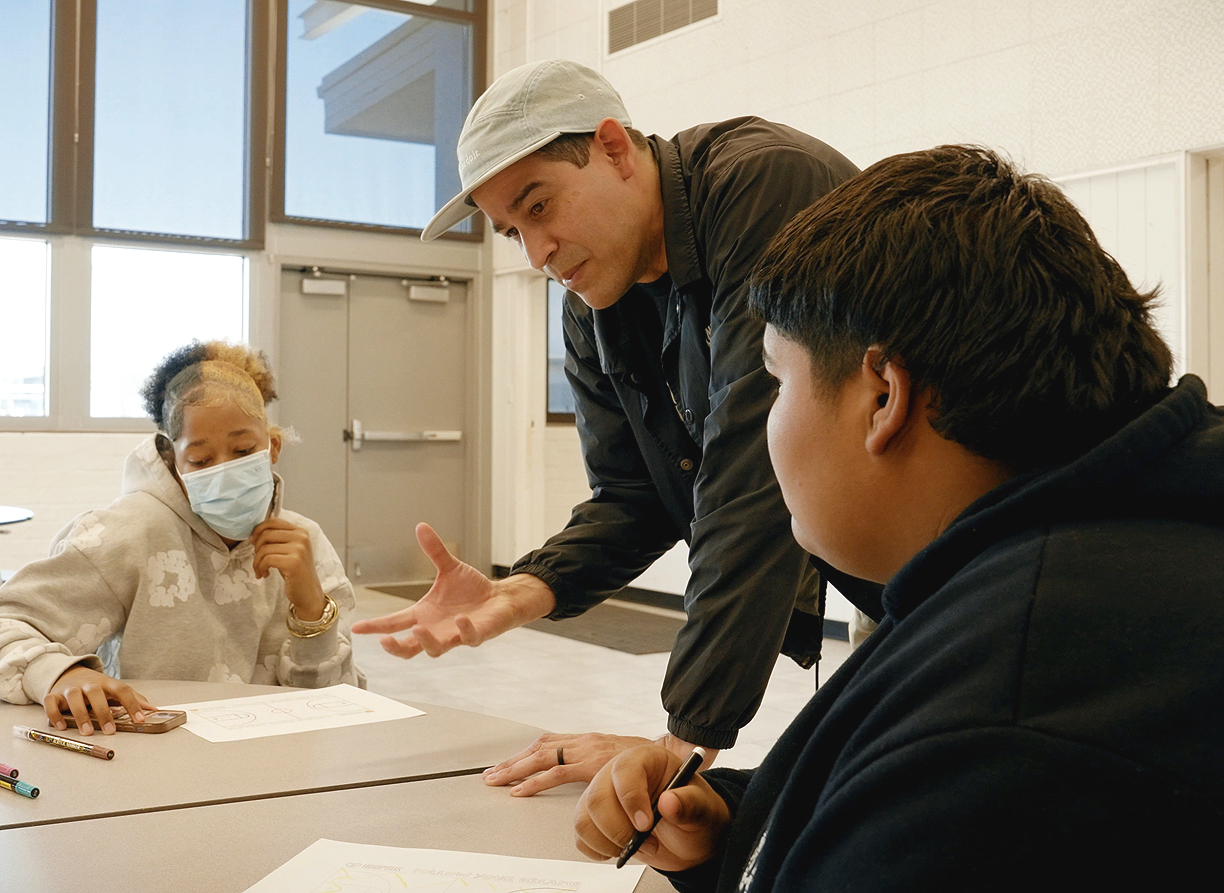
What matters is how that input is interpreted. It needs structure. A system that allows for participation while still holding the work together, so it doesn’t become scattered or lose clarity.
When that structure holds, the court becomes shared. Not because every element was chosen directly, but because the experience reflects the people it’s built for.
From Concept to Concrete
A court doesn’t exist until it’s built. What starts as sketches and vectors has to translate to paint, material, and scale. Lines that feel balanced on screen can shift on the ground. Color behaves differently in sunlight. Even heat becomes a factor — darker areas can absorb more sun, warming the surface in ways that affect both comfort and durability.
There’s a physicality to the process that changes how decisions get made. Taping, measuring, painting by hand — it forces clarity. You can’t hide behind layers or adjustments. Every move is direct, and the work has to hold up in real space.
That translation is where the design either works or falls apart. When it holds, the court carries the same clarity from concept to surface. Not just something that looks good in plan, but something that lives and holds up in use.
Identity That Holds
You start to see it in what happens around it. Courts that sat empty begin to fill again. At the Inglewood High School courts inauguration, people pointed out they hadn’t seen that many players on their outdoor hoops in decades. The space took on a new life, creating opportunities that weren’t there before.
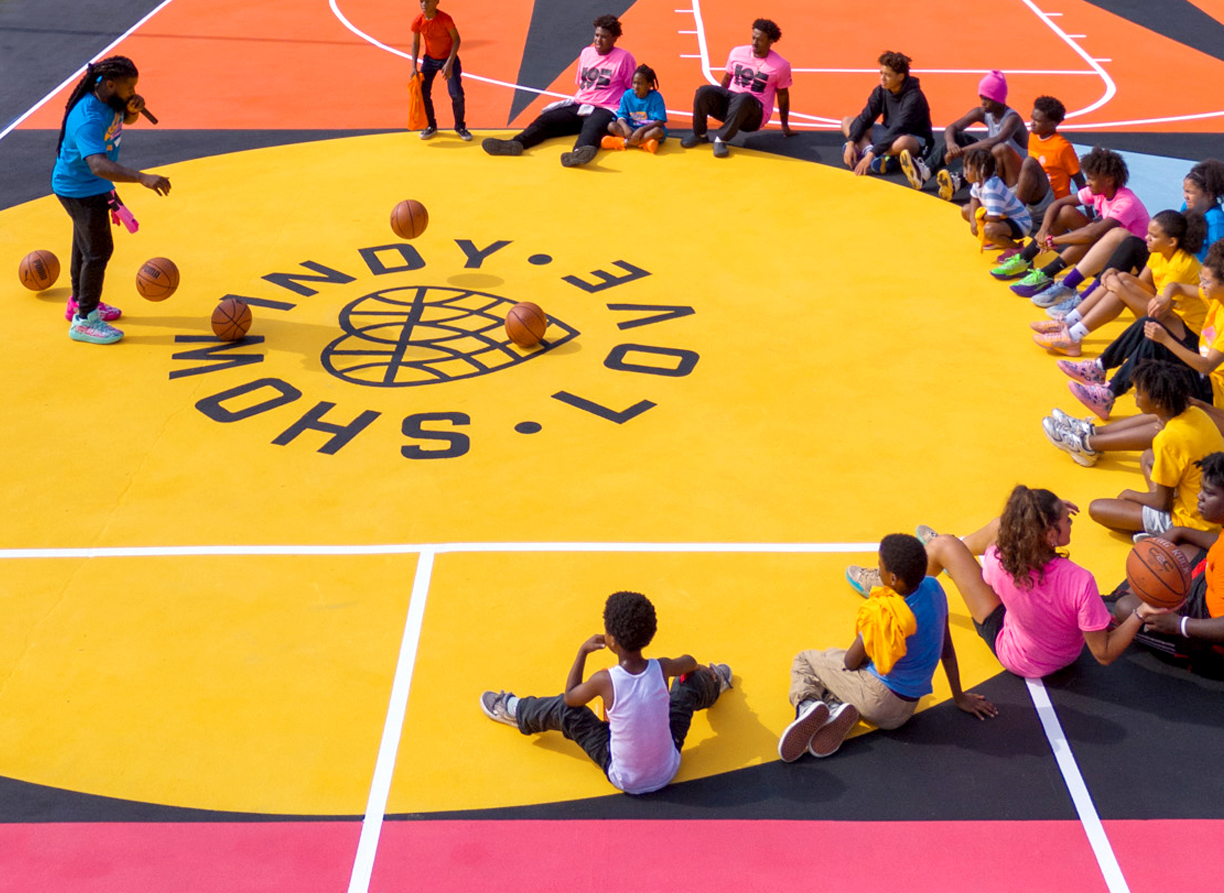
It changes how the space is used and how it’s seen. A court that was worn down becomes somewhere people want to be. A place that didn’t hold attention becomes one that brings people together — somewhere safer, more active, and cared for.
That’s the second leg of the work. It’s not just about something getting made well, but what it enables. When a court gives people a reason to show up, stay, and see something different for themselves and their community, it becomes part of the identity of that space.
If you’re thinking about how identity shows up in real space, let’s talk.