
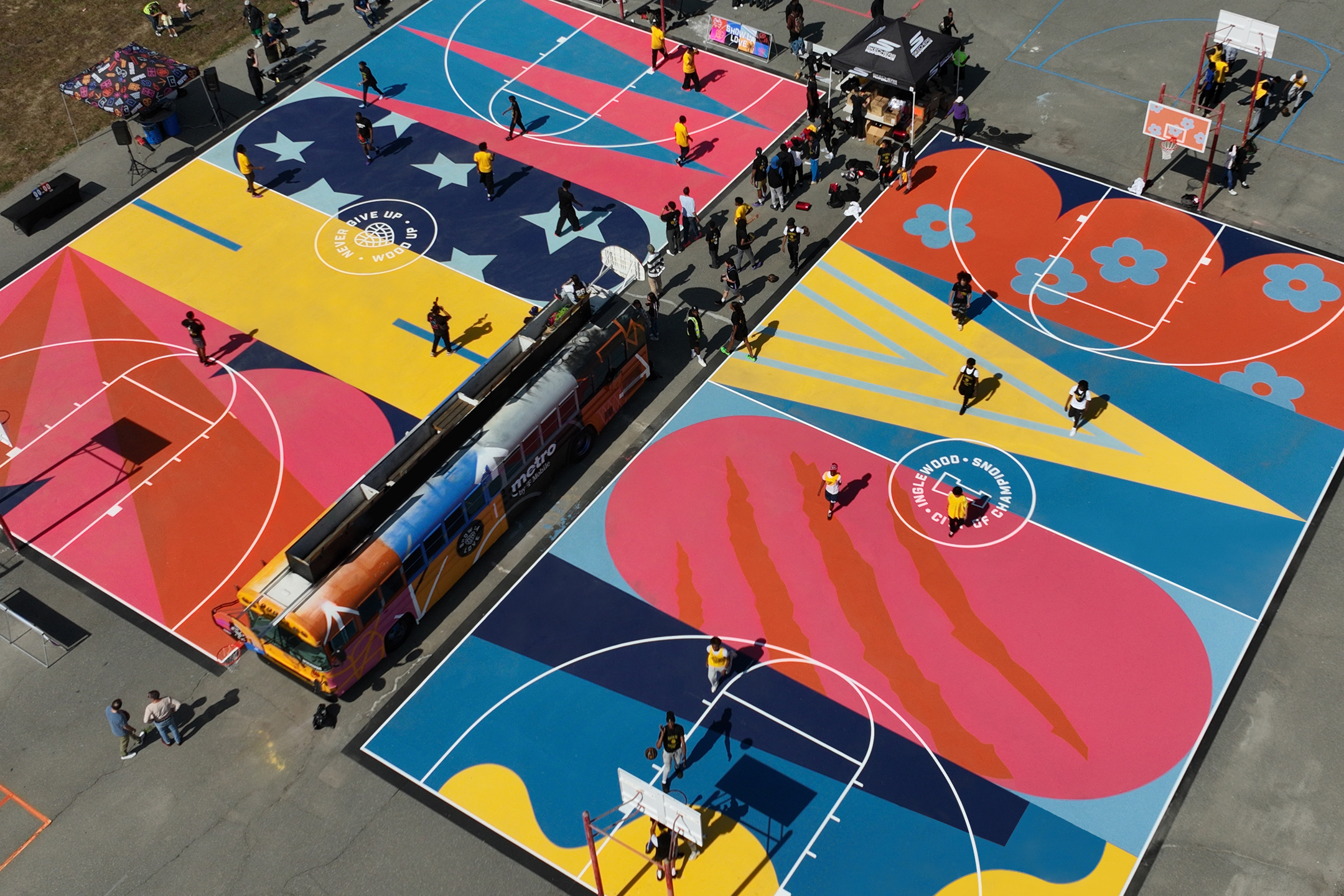
Inglewood High School Courts
During NBA All-Star Week in Los Angeles, a series of outdoor courts were reimagined across the city as part of a broader community-led effort.
At Inglewood High School, a program with a deep basketball legacy, two full courts were transformed into a permanent installation. The project was shaped through direct work with students, and translated through my visual language, grounded in the energy, movement, and culture of the game.
Facilitated by Hoopbus and developed alongside a network of collaborators, the work moved from the classroom into a built environment designed for everyday use — creating something specific to the school, with a distinct identity.
In the Classroom
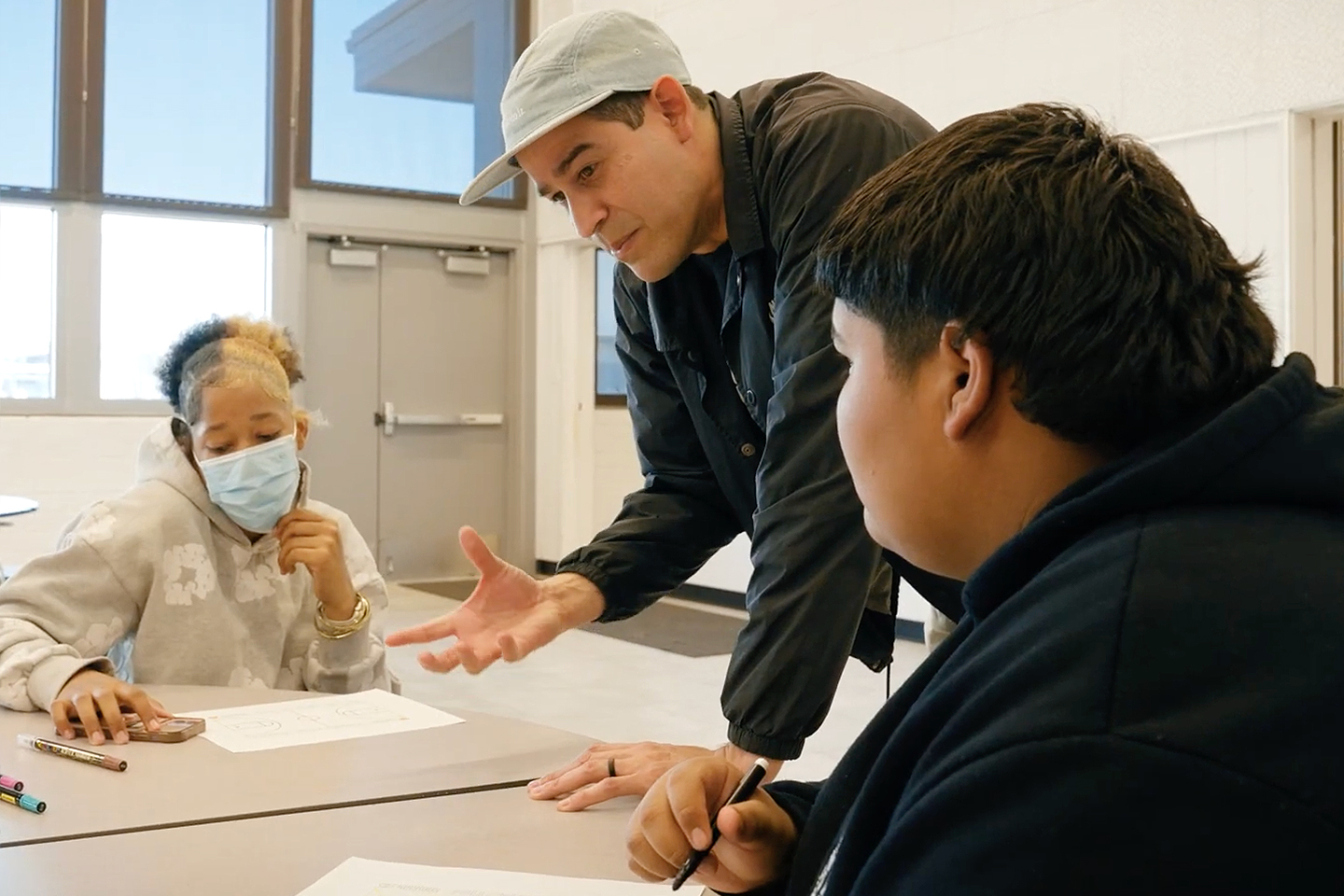
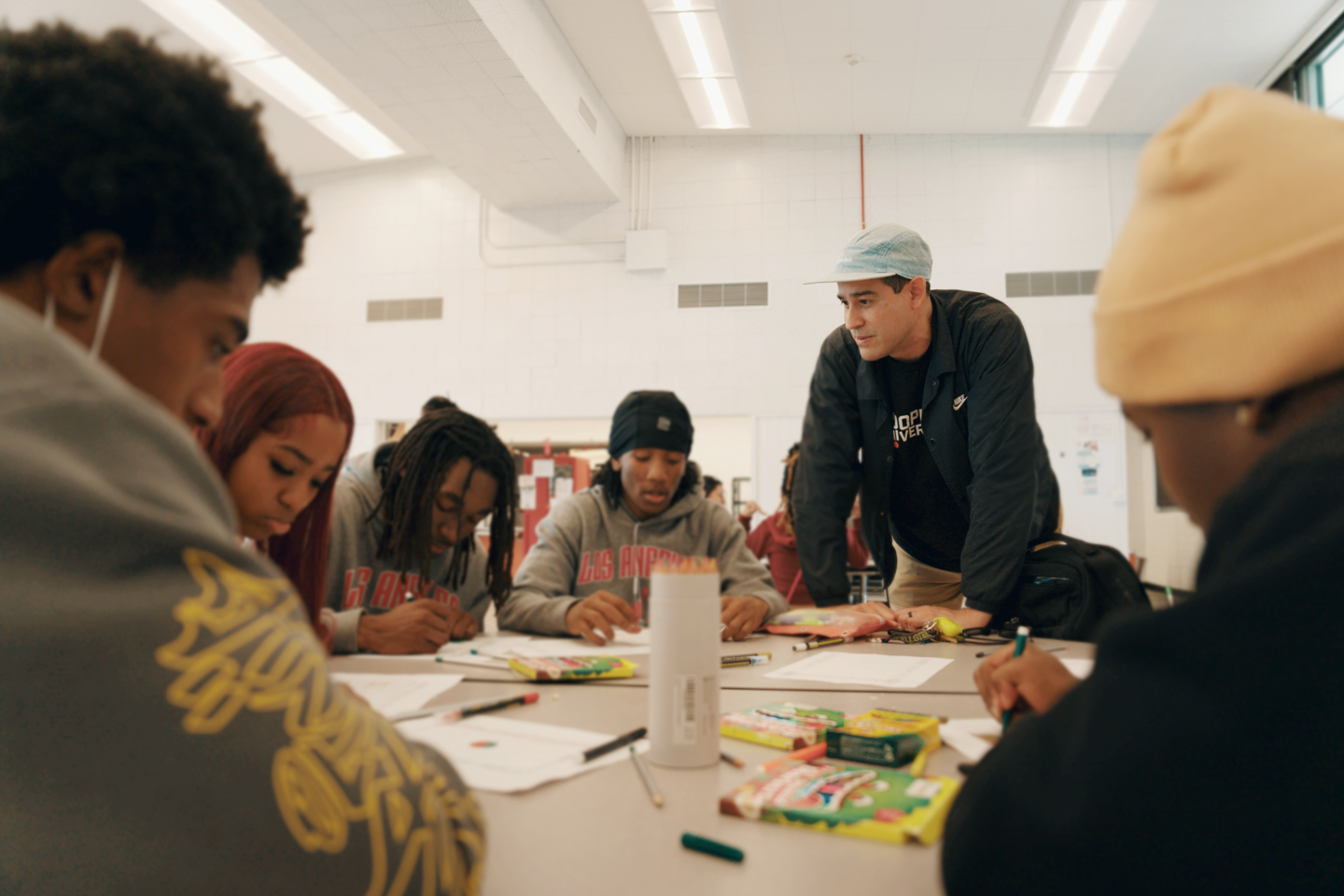
The process began in the classroom, where I co-led a creative workshop with students alongside collaborators.
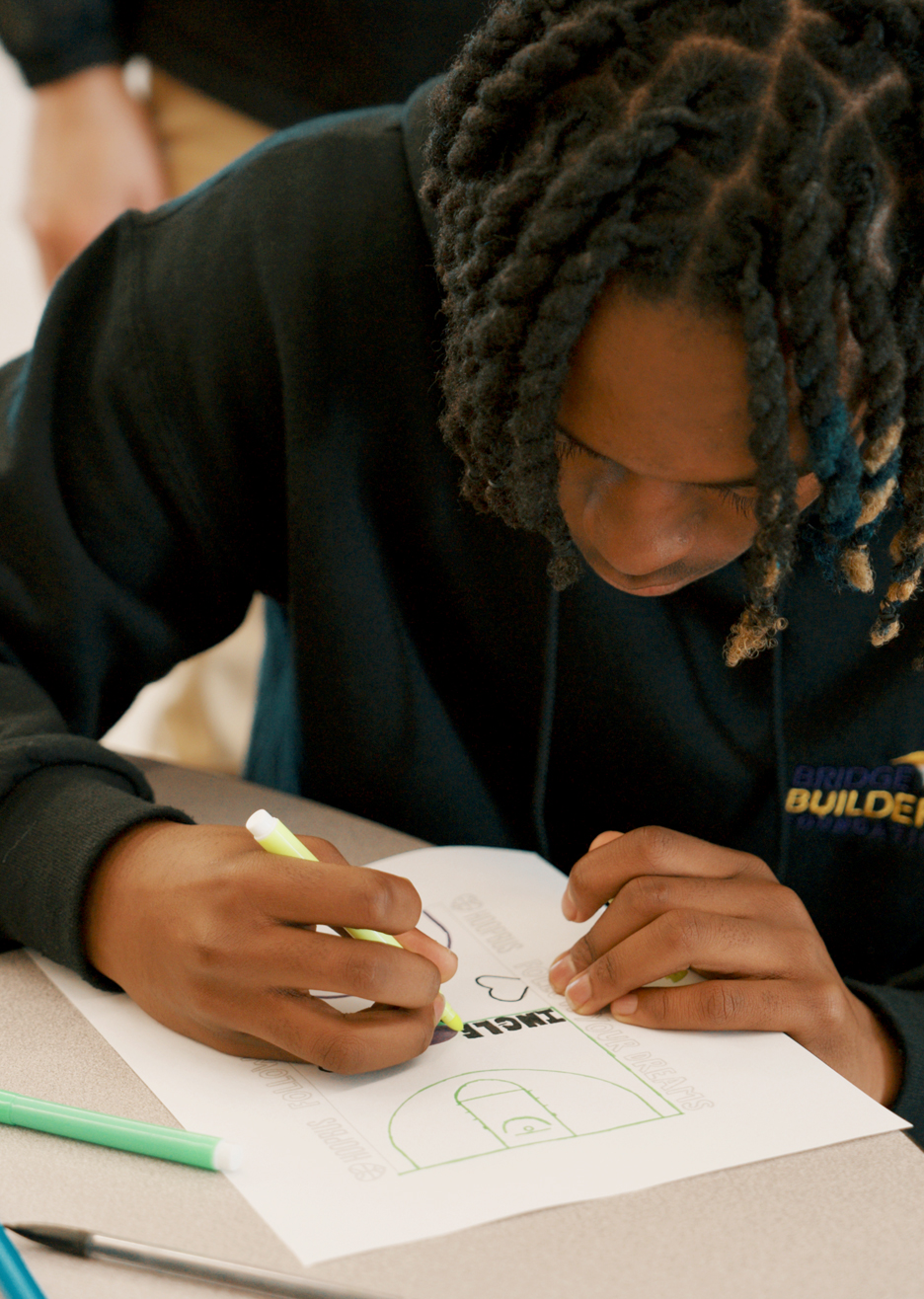
We explored how color, pattern, and form shape the way a place feels. I spoke about the connection between the game and creative expression, and students were encouraged to see themselves as creators, not just participants.
The room shifted from listening to making. We pushed their ideas by introducing contrast, typography, and how individual elements could come together as a larger composition. Students then presented their work back to the group, explaining what they made and why.
The goal wasn’t to replicate any single idea, but to collect ideas that could be carried forward into the final design.

Back In the Studio
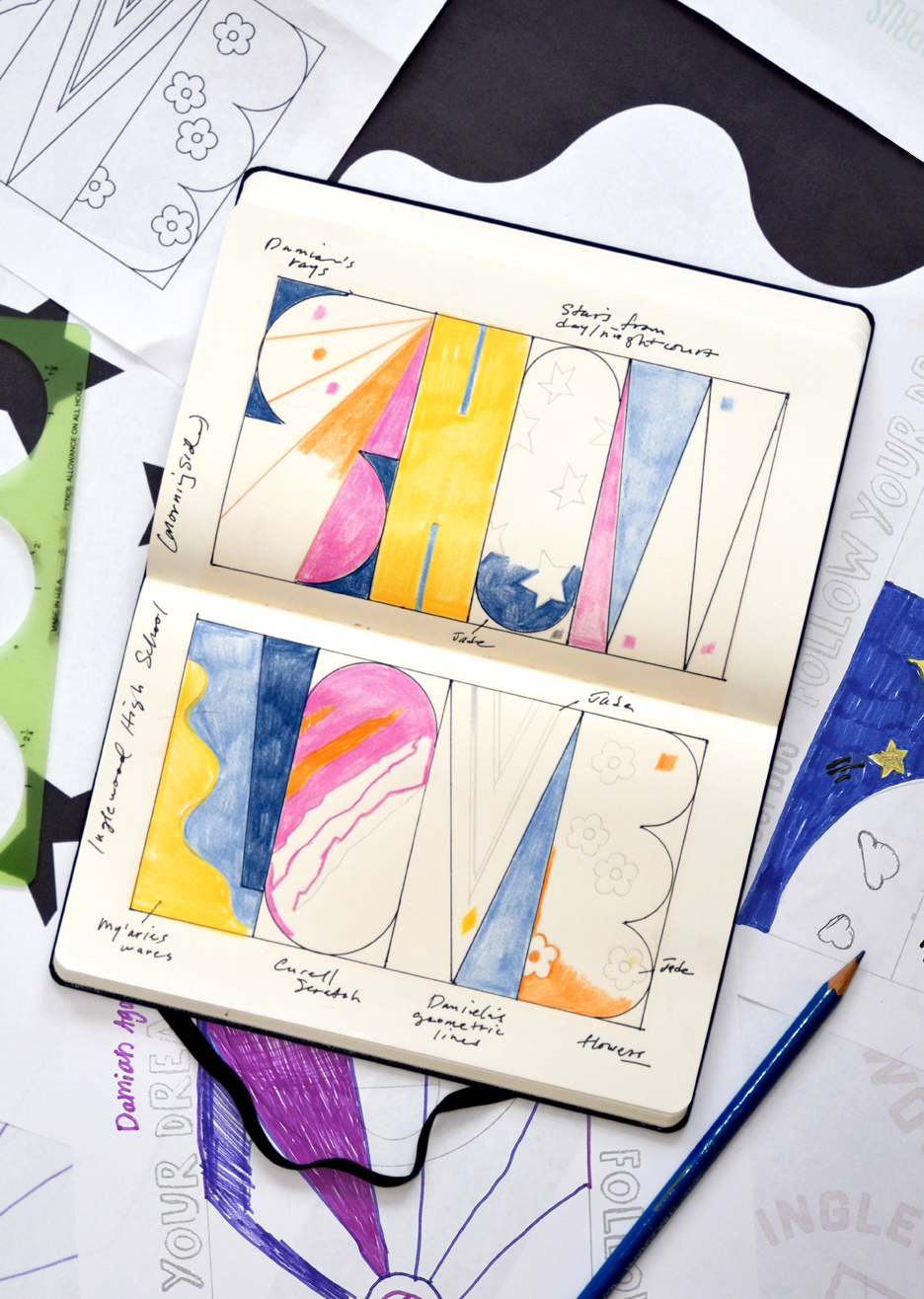
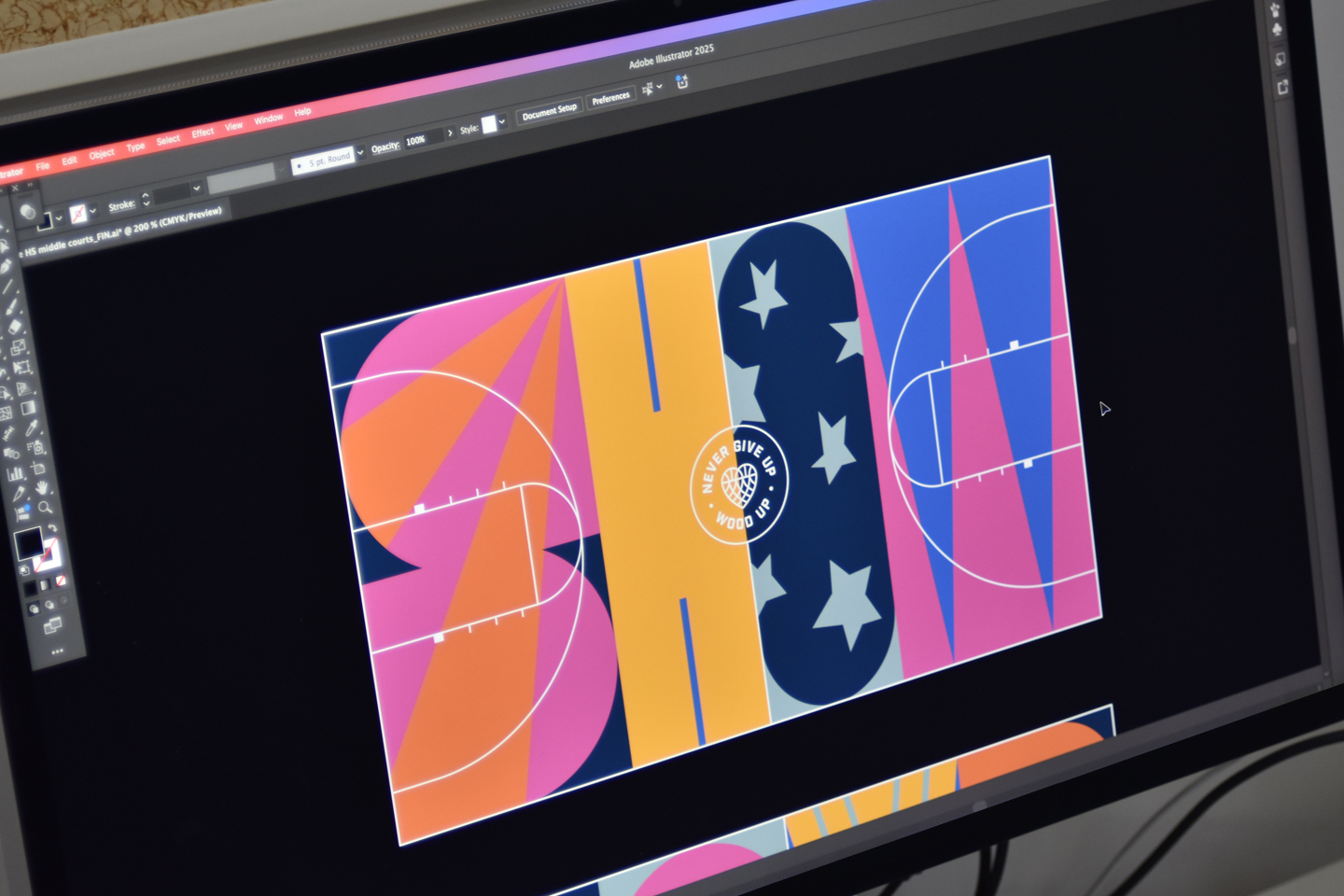
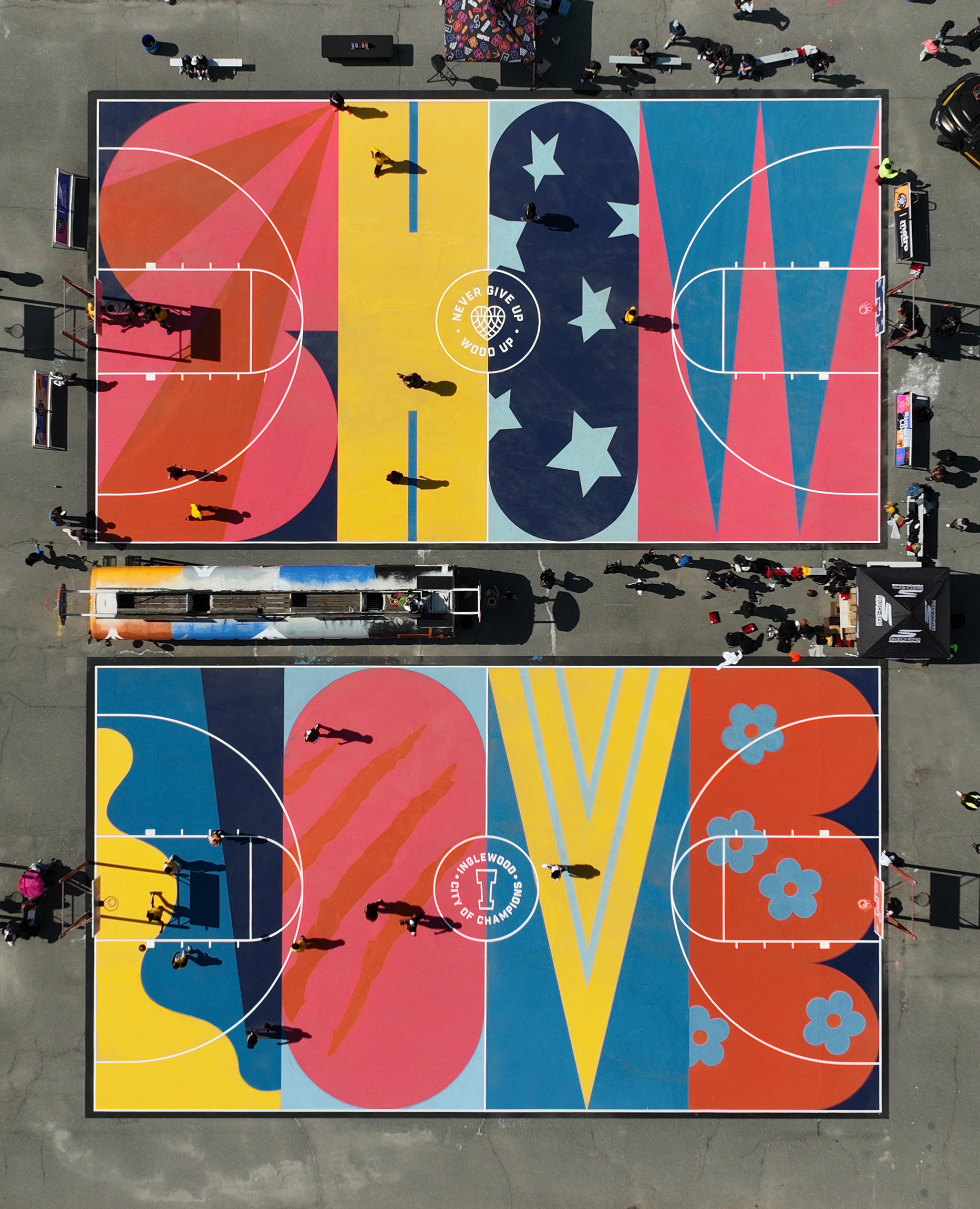
Back in the studio, I developed the two-court design as a unified system, using typography as form. Each court carries a single word, SHOW and LOVE, built from simple shapes that stretch, compress, and interact across the surface. Color is used in blocks, creating rhythm, contrast, and movement at scale.
Elements from the workshop were carried into the design. Forms like stars, flowers, and graphic marks were refined and integrated to align with the overall visual language.
The goal was to create something bold and legible from the sky, while revealing more detail up close. A composition that fits together as a whole, but rewards movement across it.
On the Ground
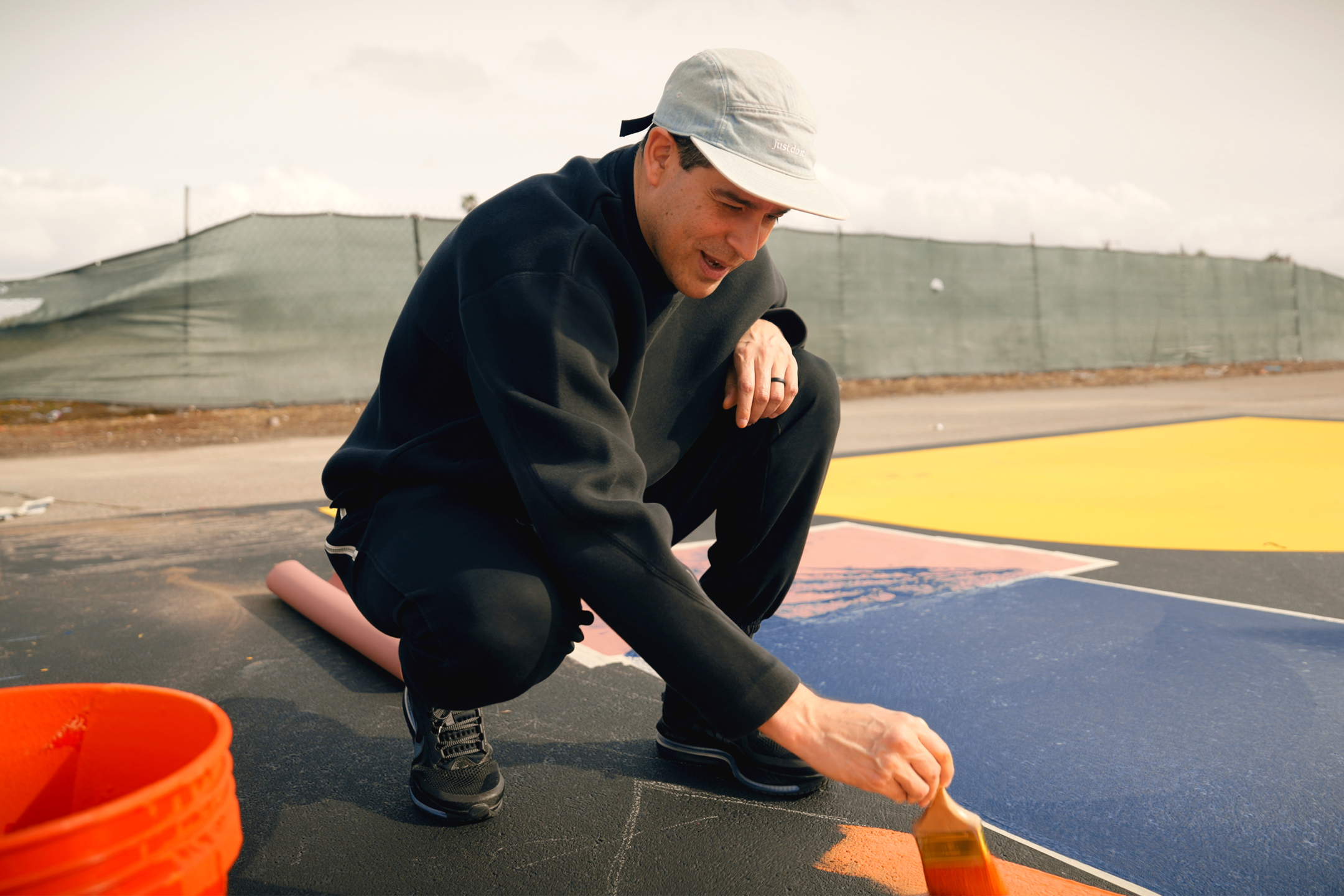
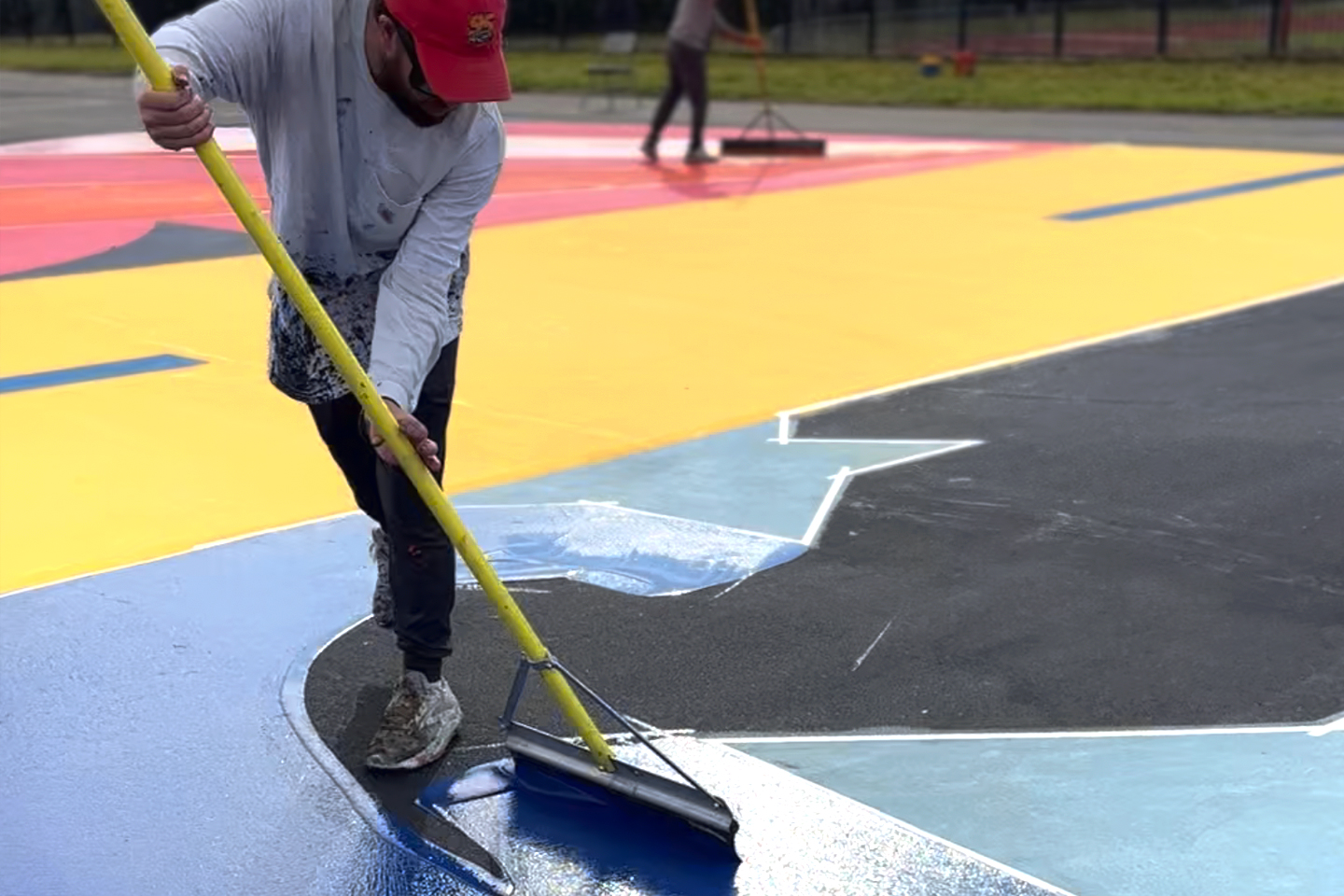
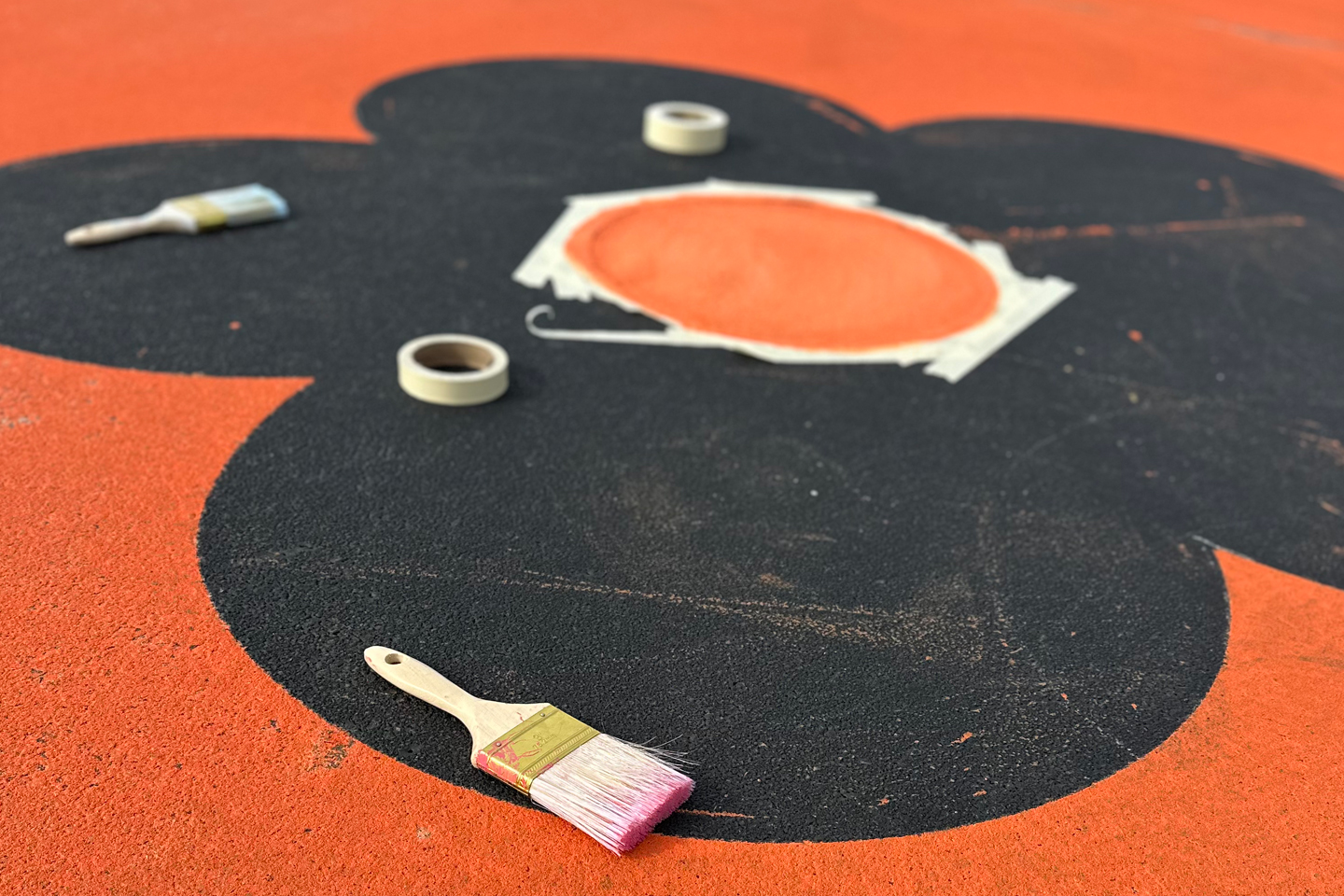
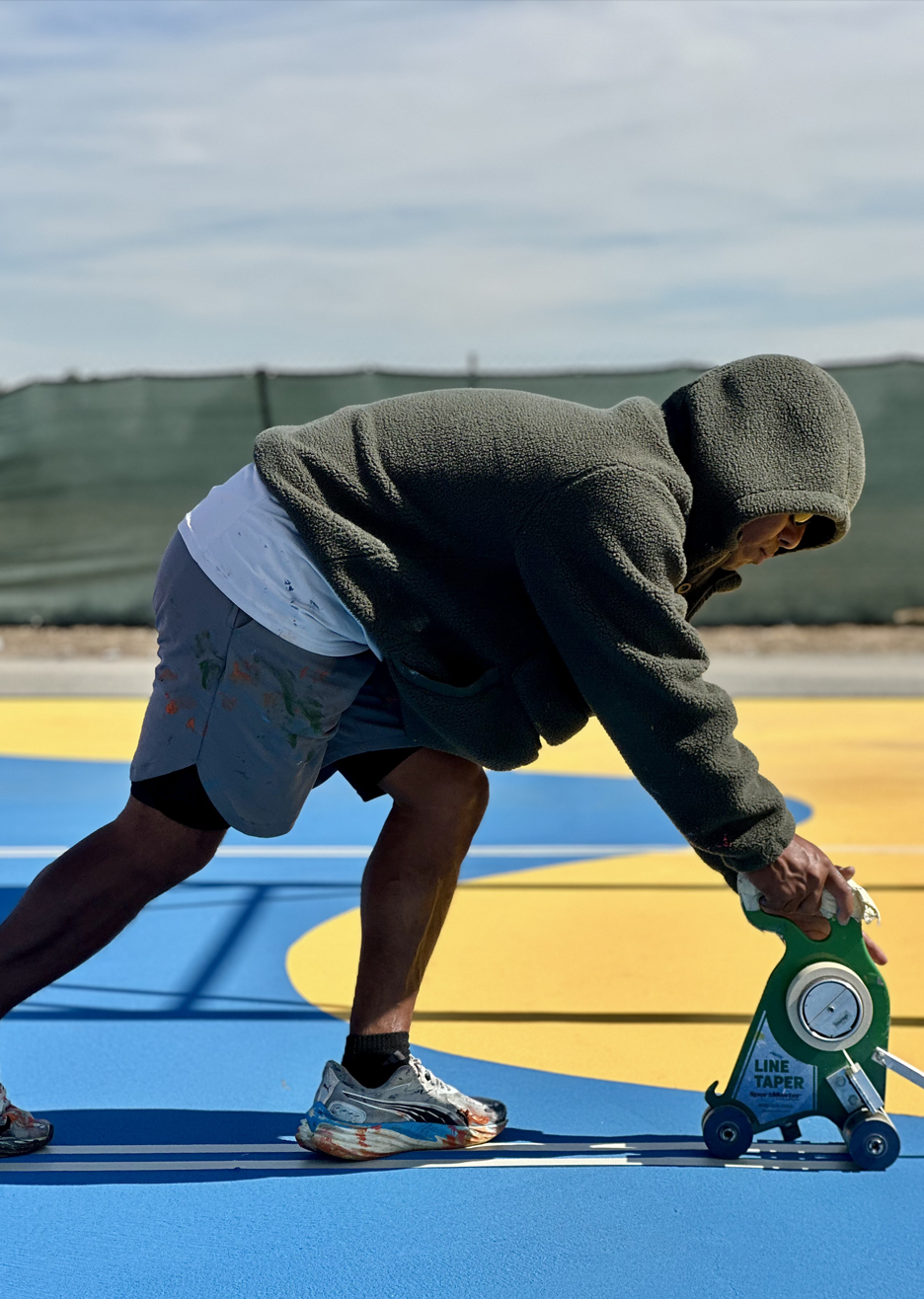
The work moved from drawings to surface. Courts were resurfaced, measured, and taped, preparing the ground for color to be built up layer by layer.
Paint was pulled across the asphalt with squeegees, each section filled and refined in sequence. I worked alongside the painters and students on site, guiding the layout and adjusting details as the design took shape at scale. A series of backboards were installed, extending the system beyond the court itself.
Midway through production, a rainstorm brought everything to a stop. The opening was pushed back as we waited for the surface to dry before returning to complete the work.
Coming Together
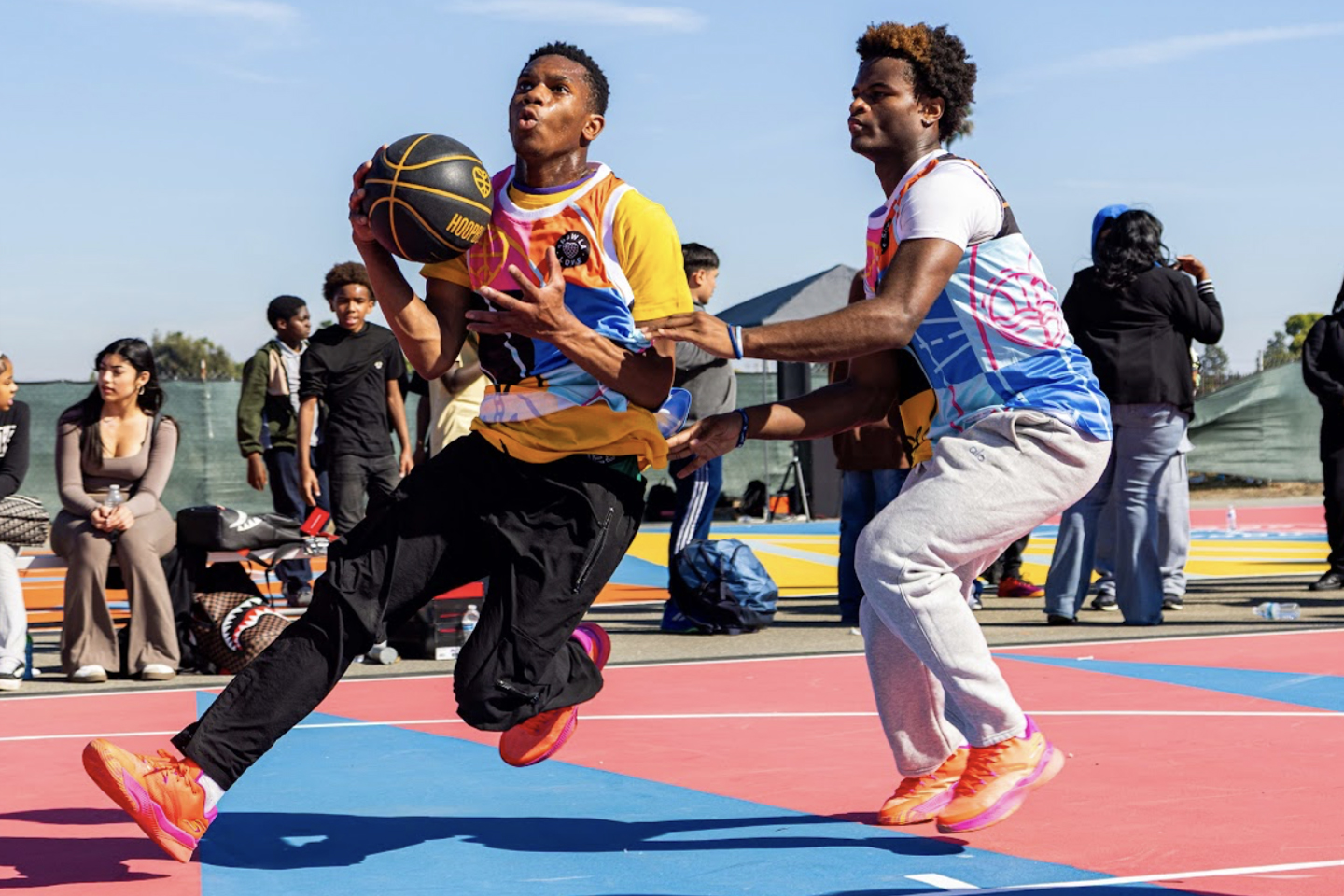
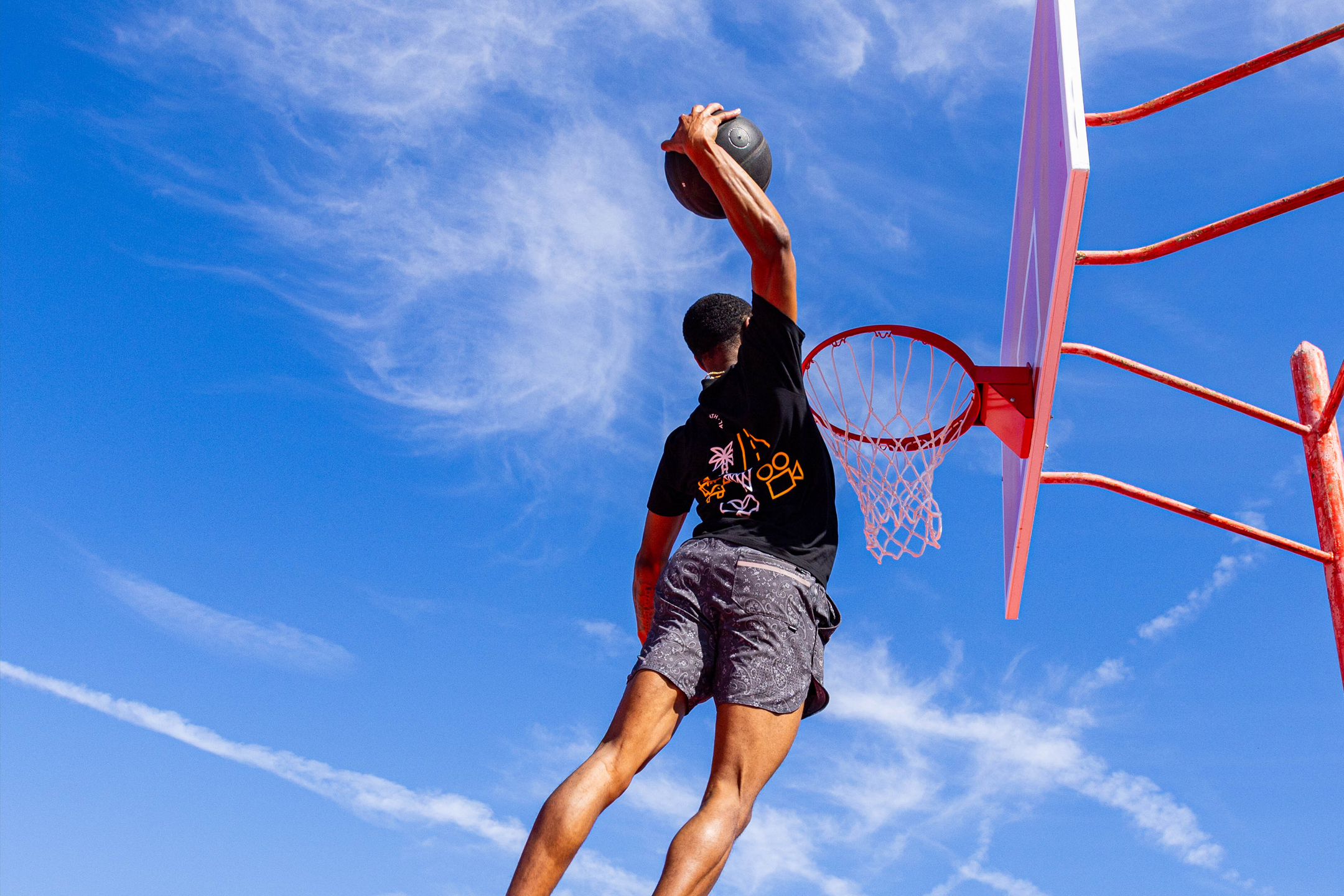
Students, athletes, and families filled the space, moving across the surface in real time. What had been developed in the studio shifted into something lived.
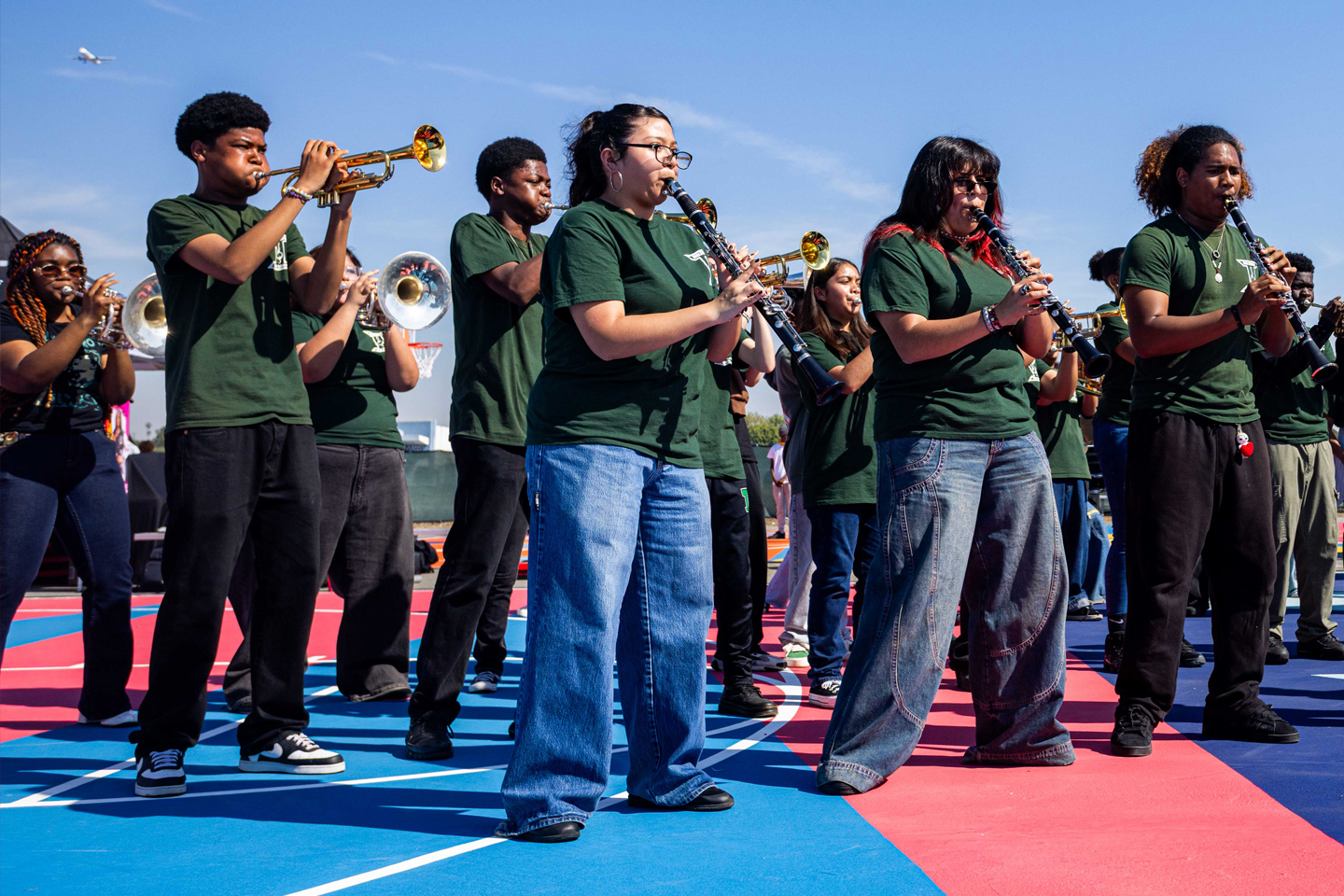
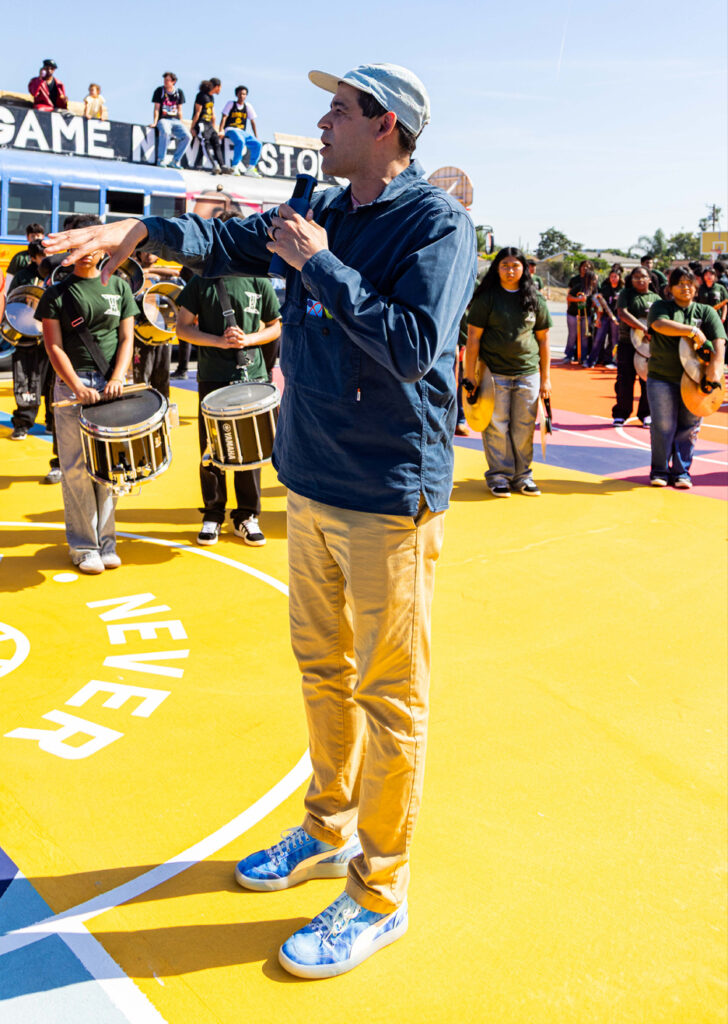
The award-winning school marching band moved through the site, performances unfolded, and the energy built throughout the day. The courts became more than a place to play, holding sound, movement, and shared attention.
At the opening, I spoke about what the work was meant to carry forward. A reminder to show love for the game, for each other, and for the community around it.
Two Courts, One Message
The design began to do what it was built to do. Not just to be seen, but to be experienced. Something people could recognize themselves in, and return to over time.
It’s not static. It’s a system. One that holds together, while leaving space for interpretation. Shaped by design, but fully realized by the people who move through it.