
Show LA Love
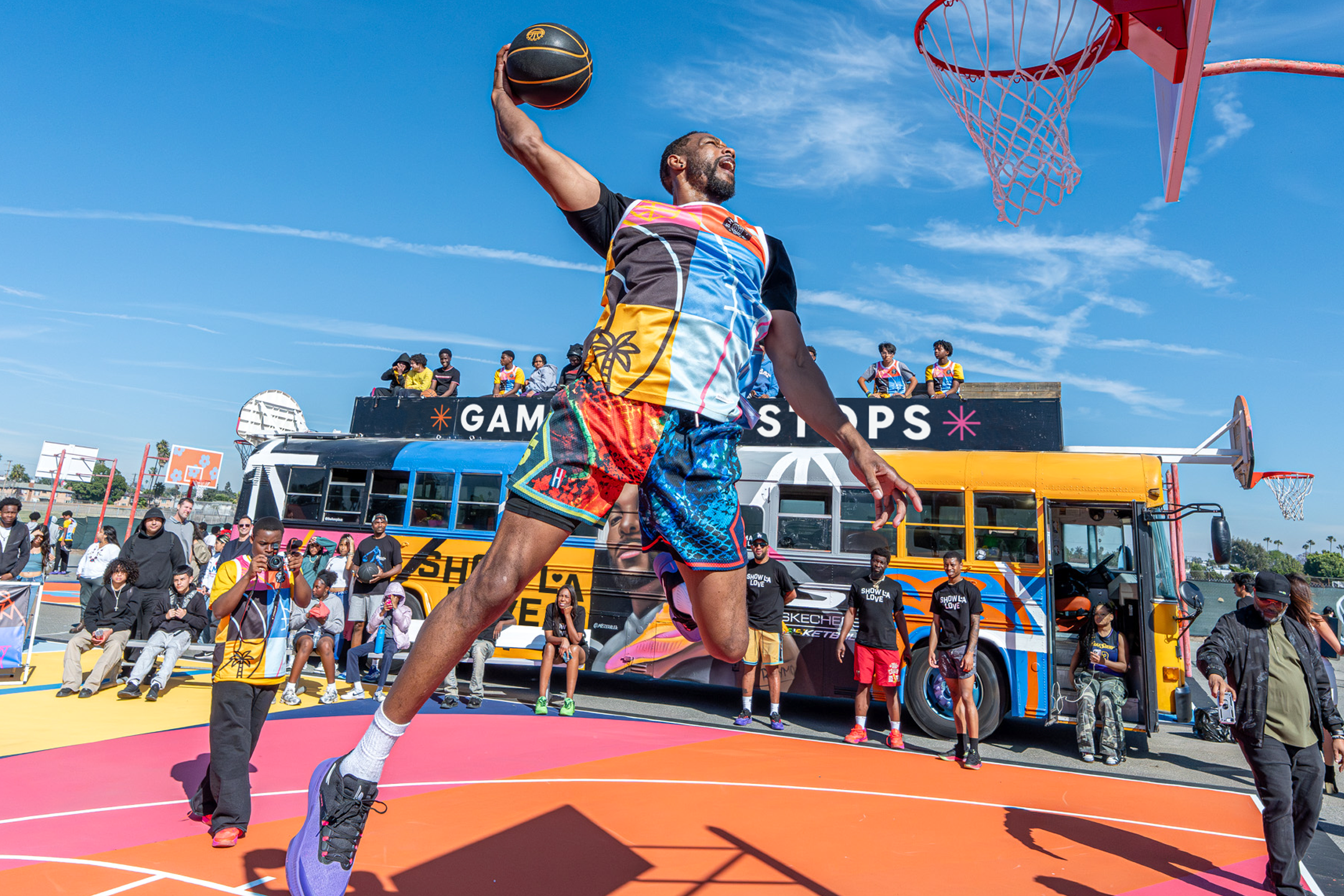
The Show LA Love identity system was developed for Hoopbus during NBA All-Star Week in Los Angeles, moving across the city through a series of activations, partnerships, and community programming.
Rooted in the visual language of the city, the system extended across apparel, objects, courts, and public activations—designed not just to be seen, but to be used.
It carried through neighborhoods, partnerships, and events, where identity took shape in real time.
Rooted in Los Angeles
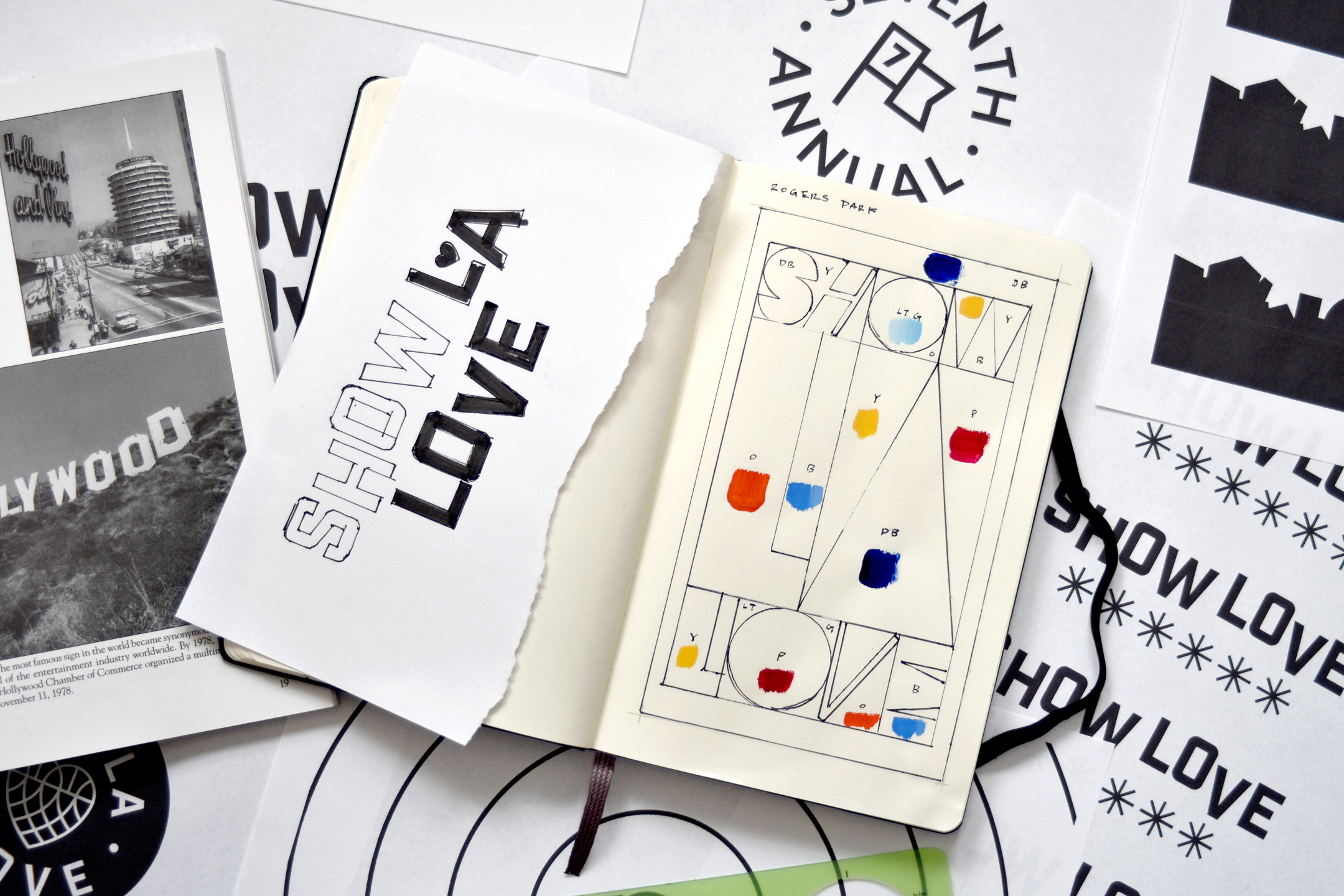
The identity draws from Los Angeles—its landmarks, history, and visual landscape.
Simplified skylines appear across the system, reducing recognizable forms into a graphic language that can scale across formats. Typography pulls from the irregular rhythm of hillside lettering, with letterforms that rise and shift rather than sit evenly on a baseline.
Circular and layered forms reference the structure of the city, highway interchanges and the repeating geometry of the Watts Towers, translated into bold, graphic compositions.
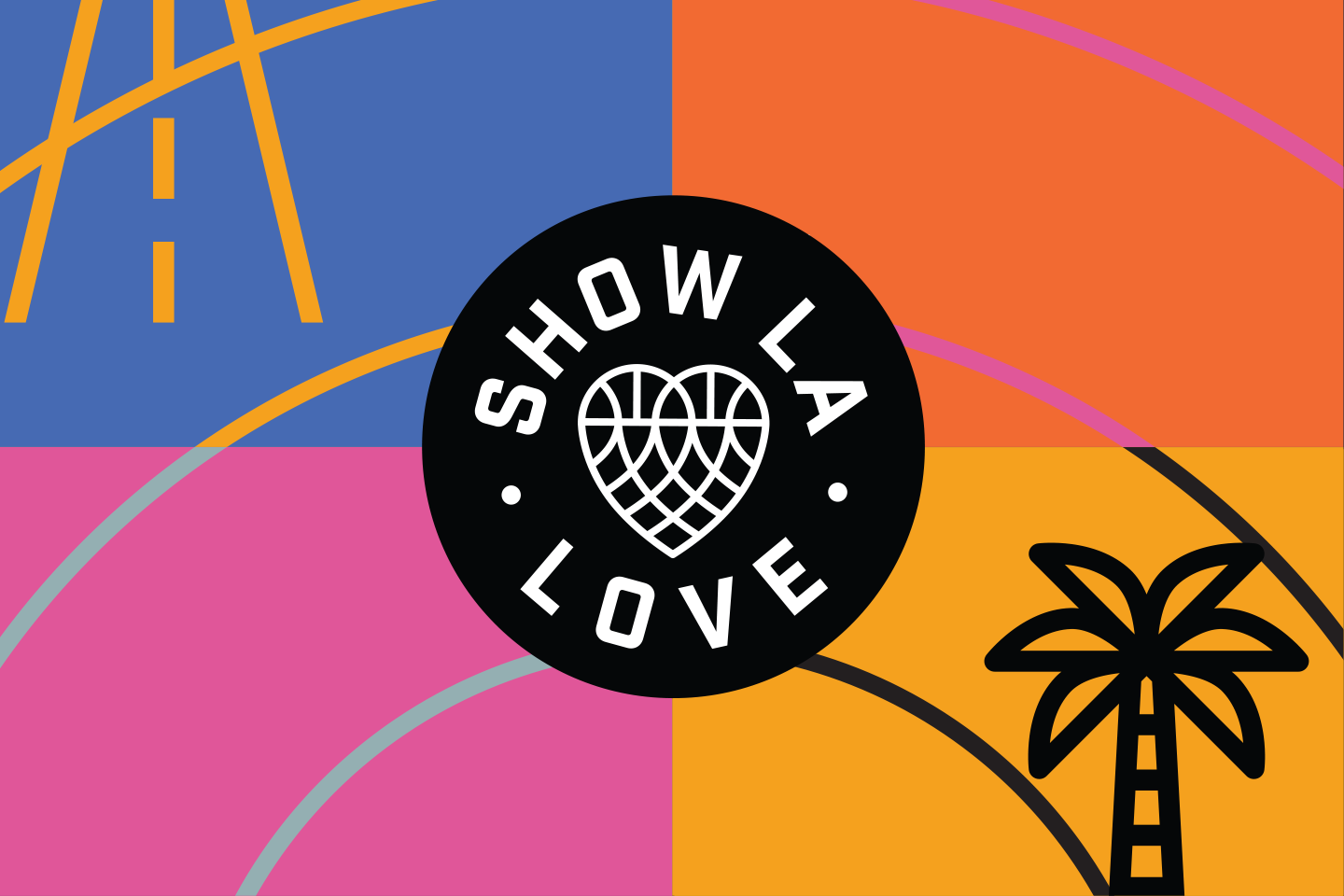
Bright color, expressive type, and graphic shapes create a flexible system, built to move across surfaces.
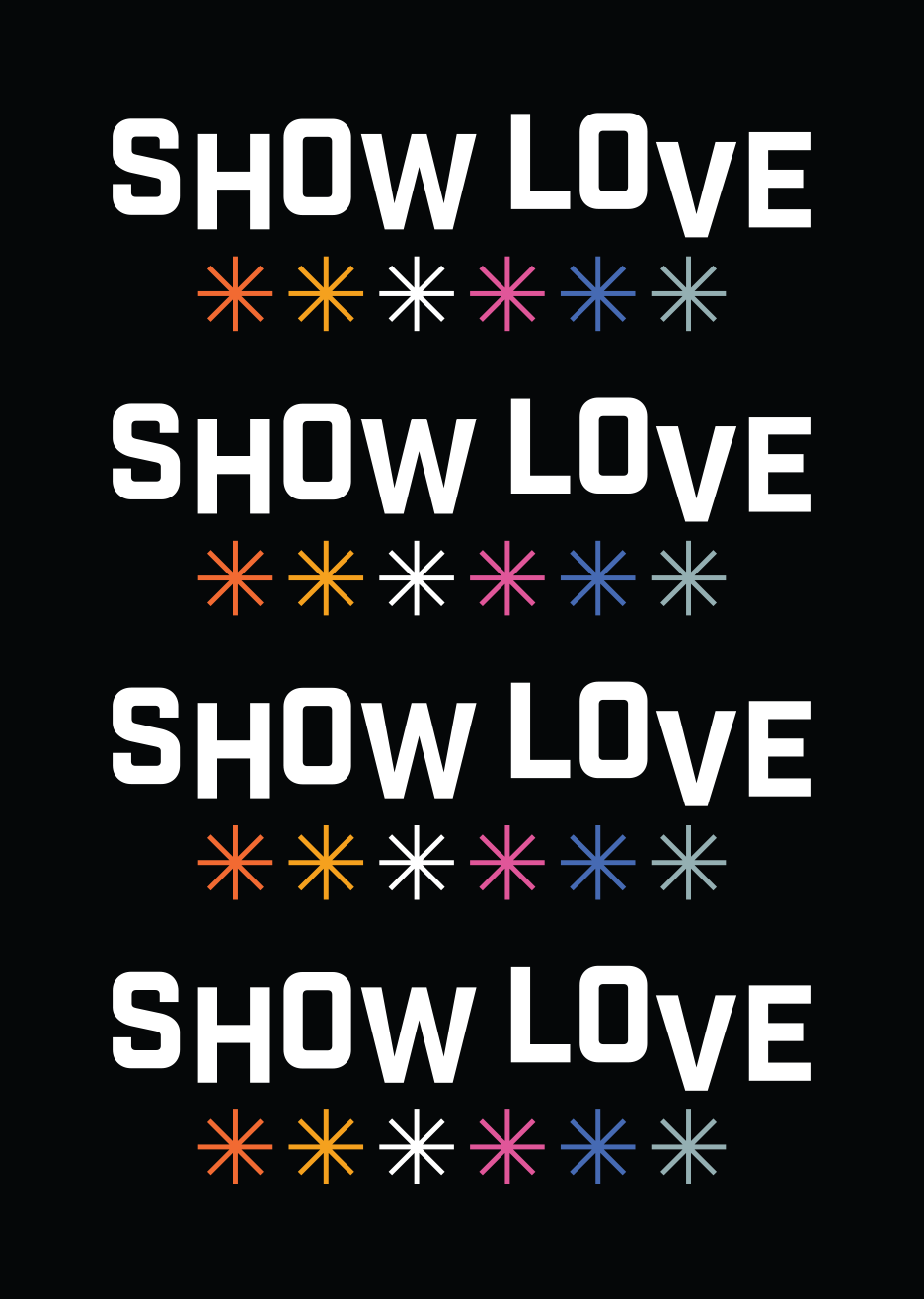
Applied Across the System
The system extended across environments, objects, and people—remaining consistent while adapting to different contexts.
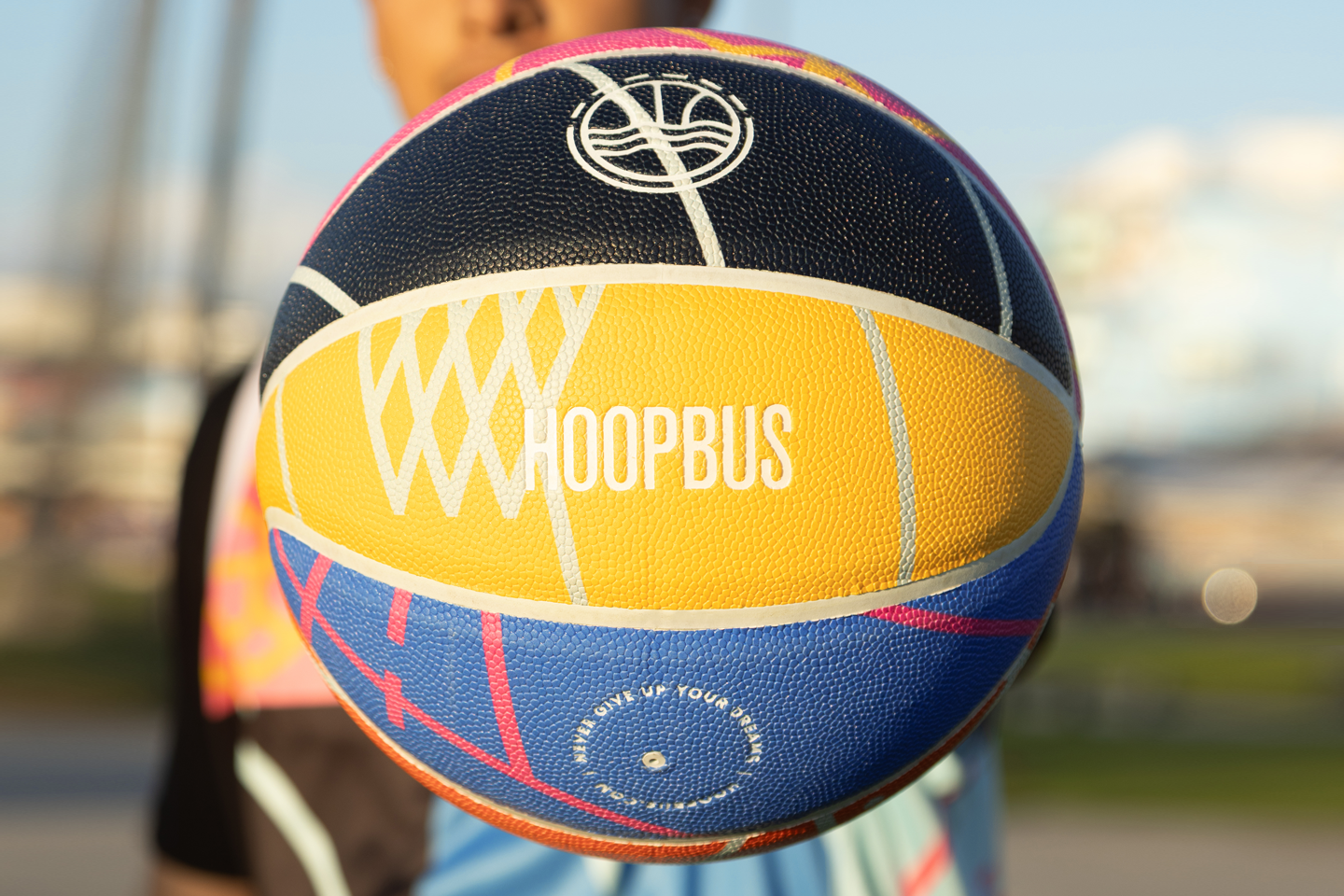
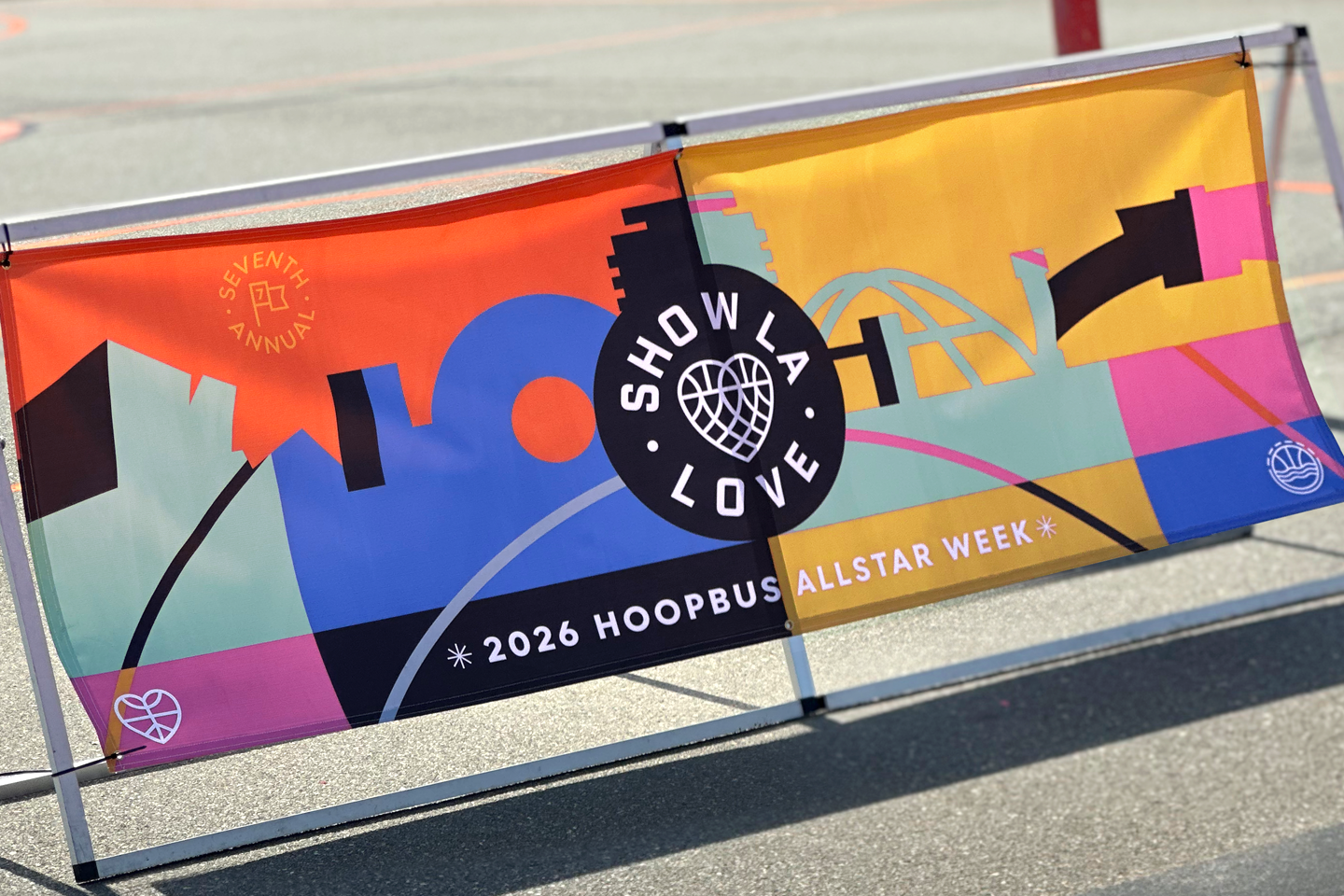
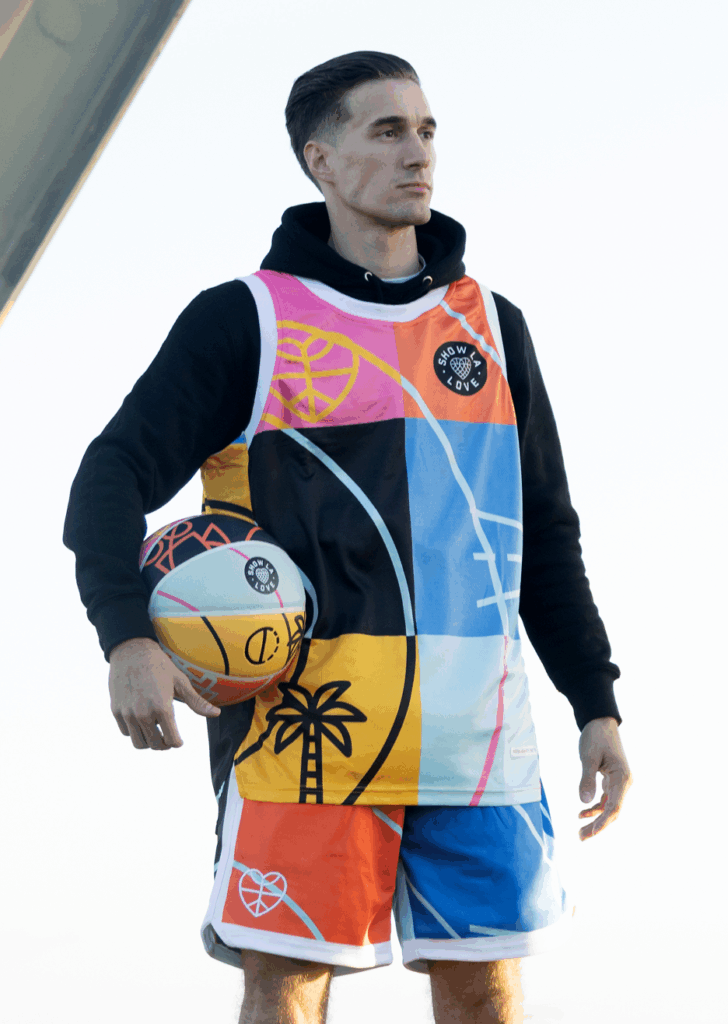
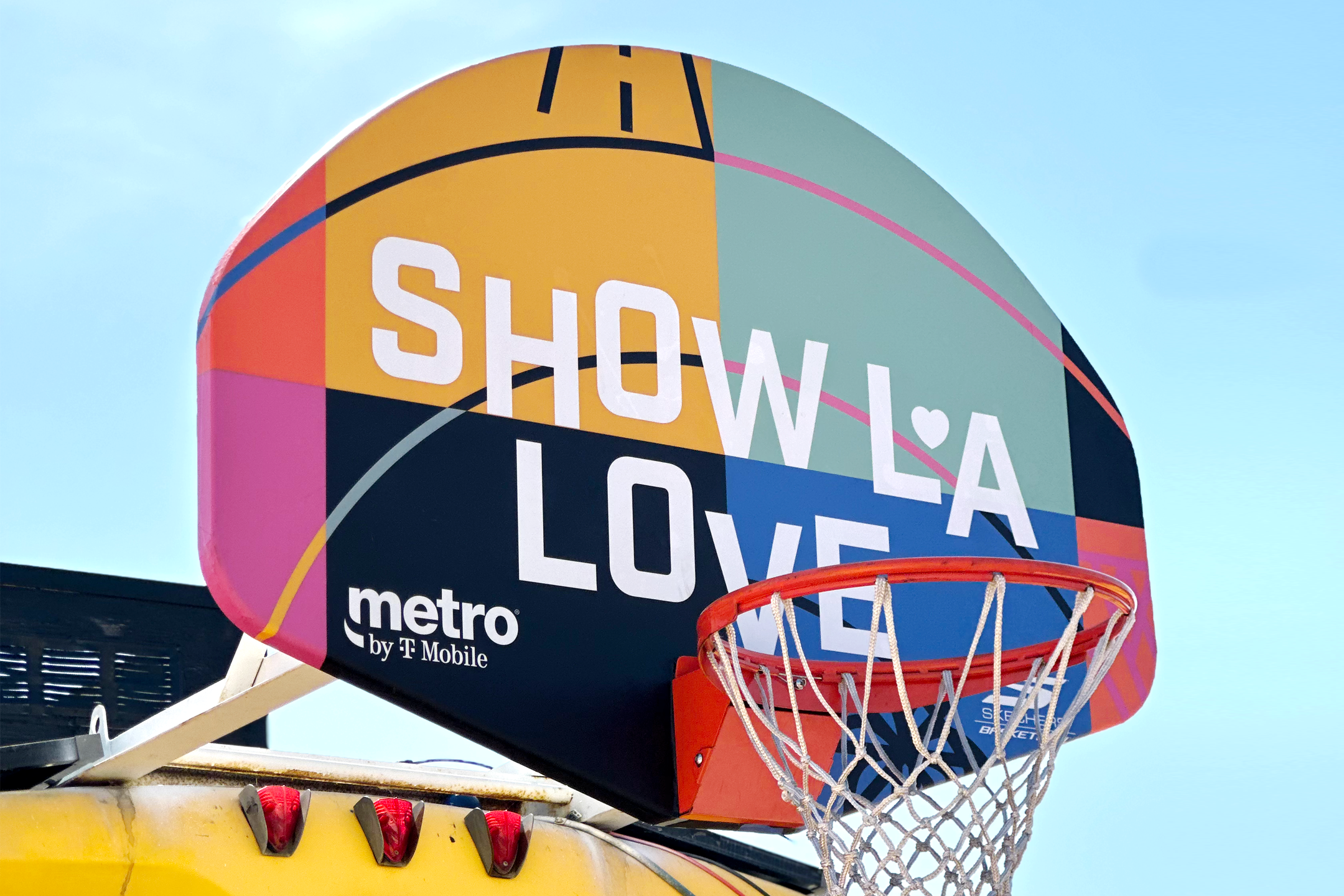
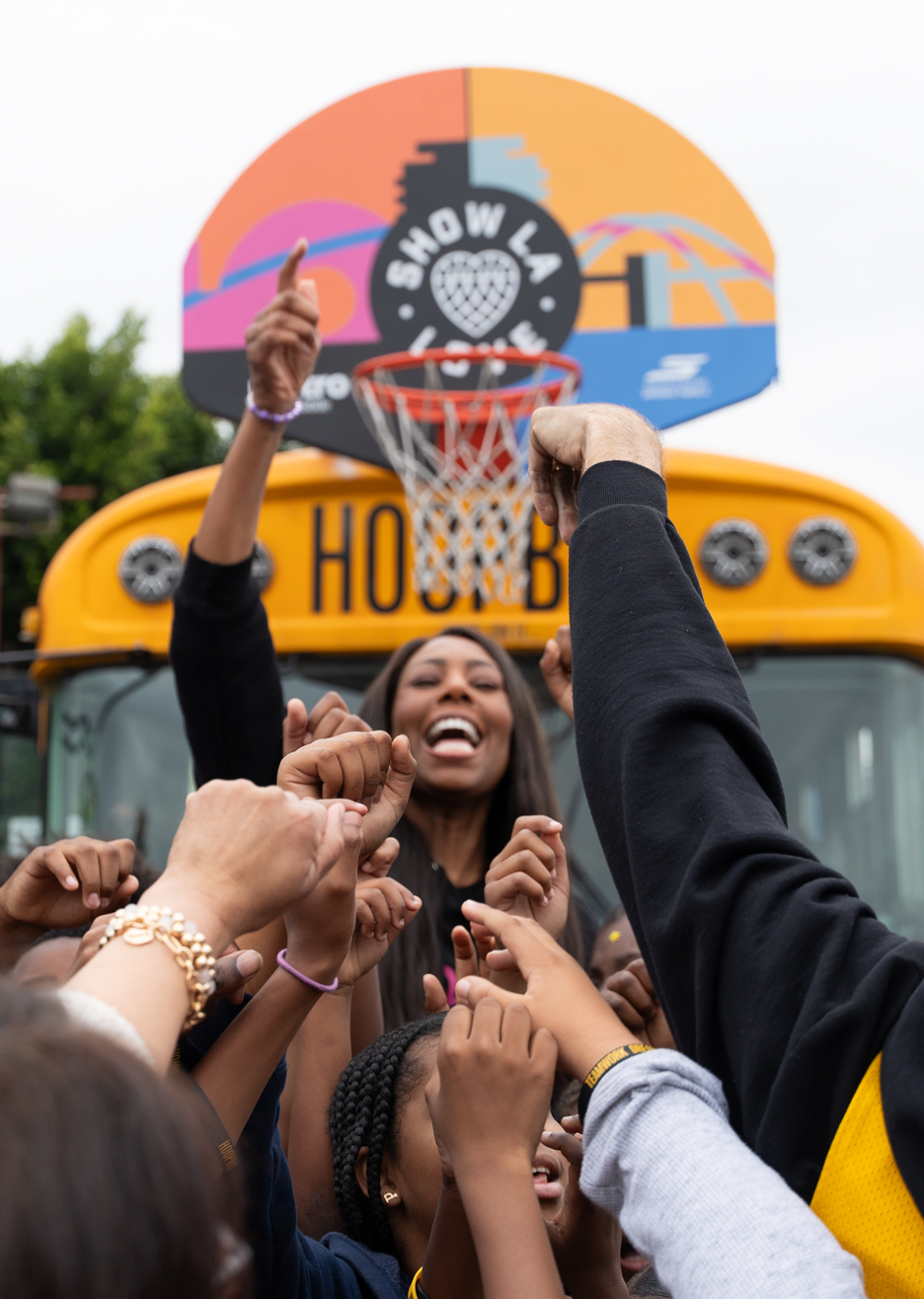
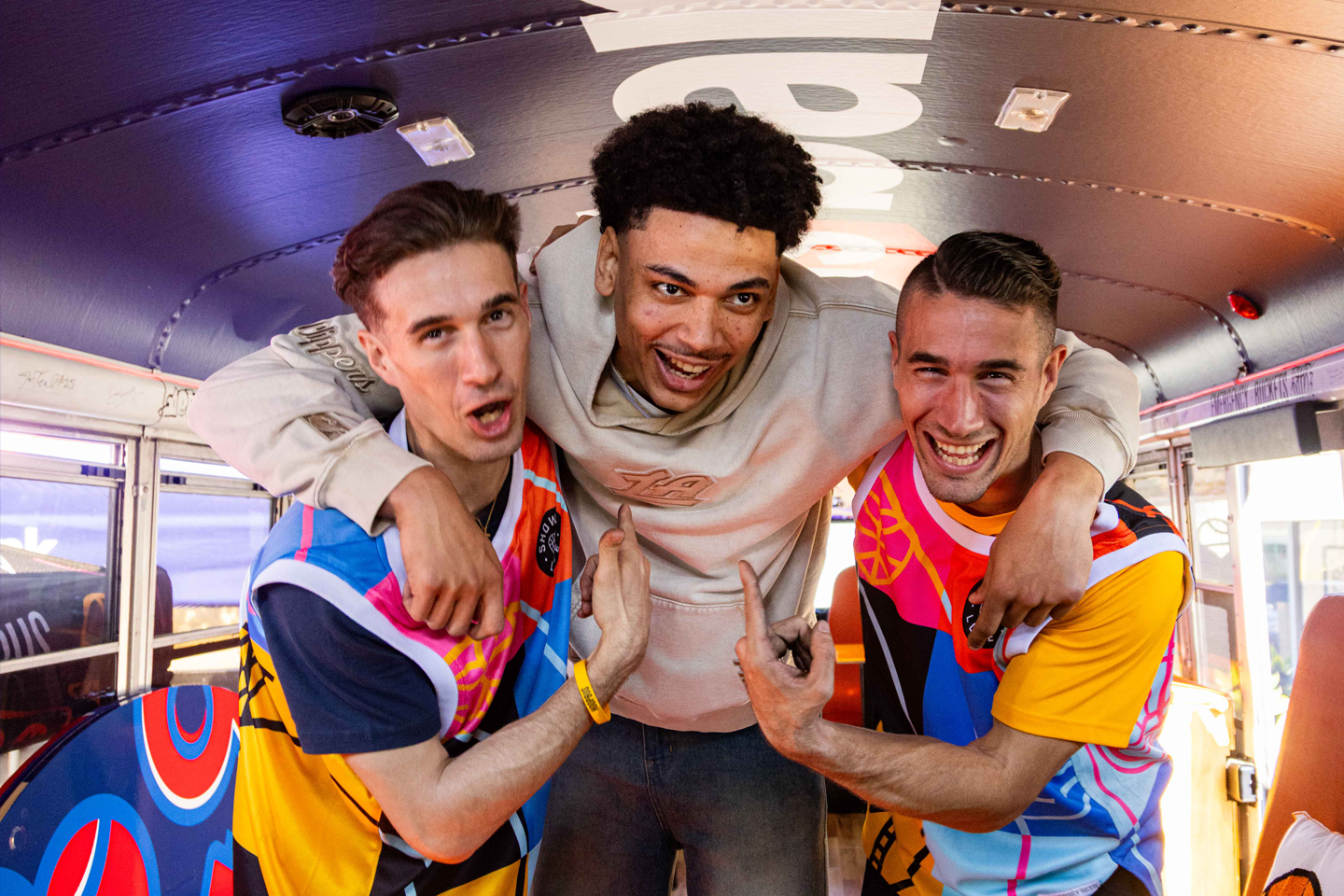
It appeared in the spaces themselves through banners and backboards, and on the people within them through jerseys, t-shirts, and sweatshirts. Even the basketball became part of the system, carrying the same visual language into the game itself.
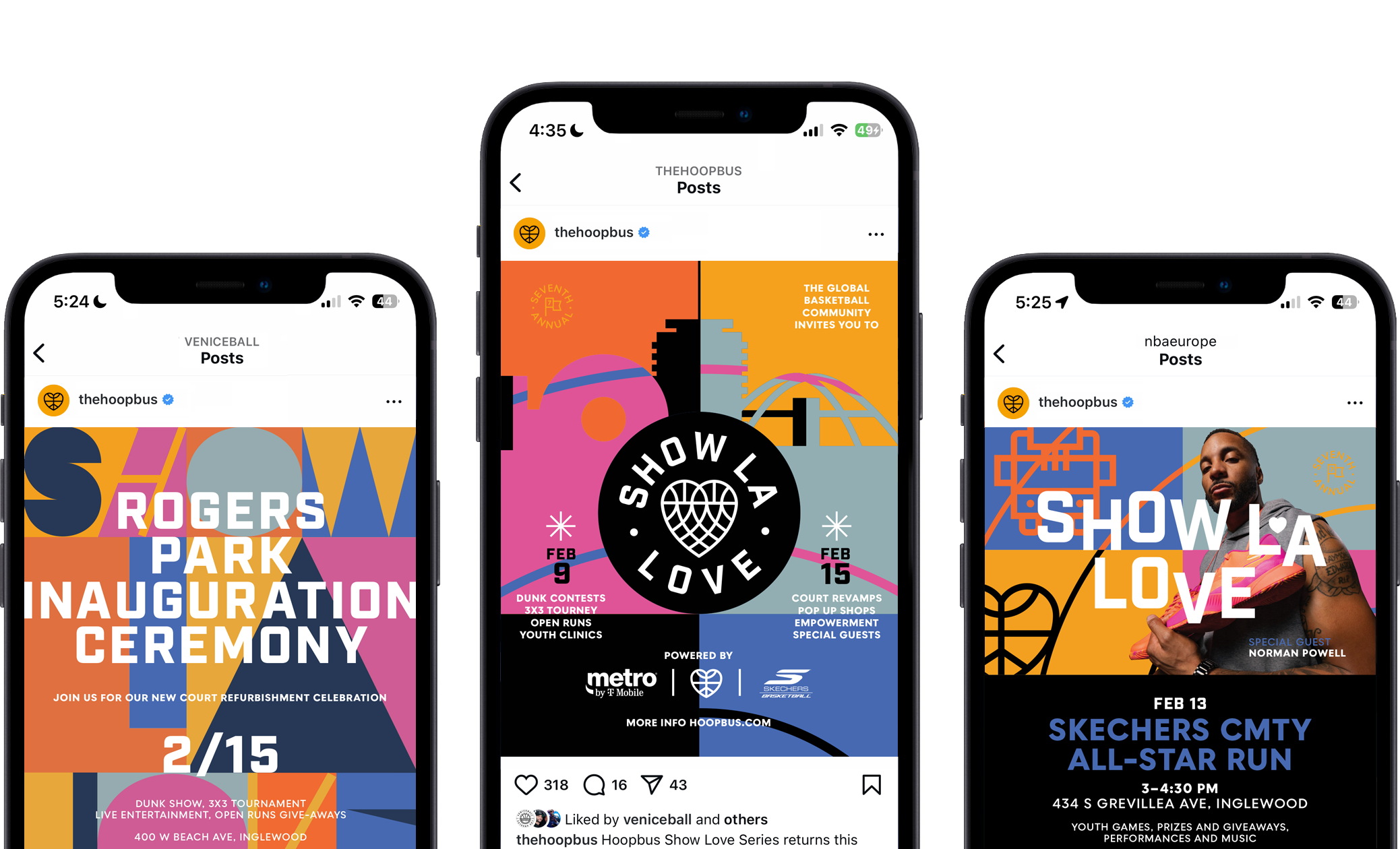
Across the week, a suite of flyers and social graphics helped organize and announce a dense schedule of activations, often happening simultaneously across the city. Together, these elements created a cohesive language to guide and identify within each moment.
The City Activated
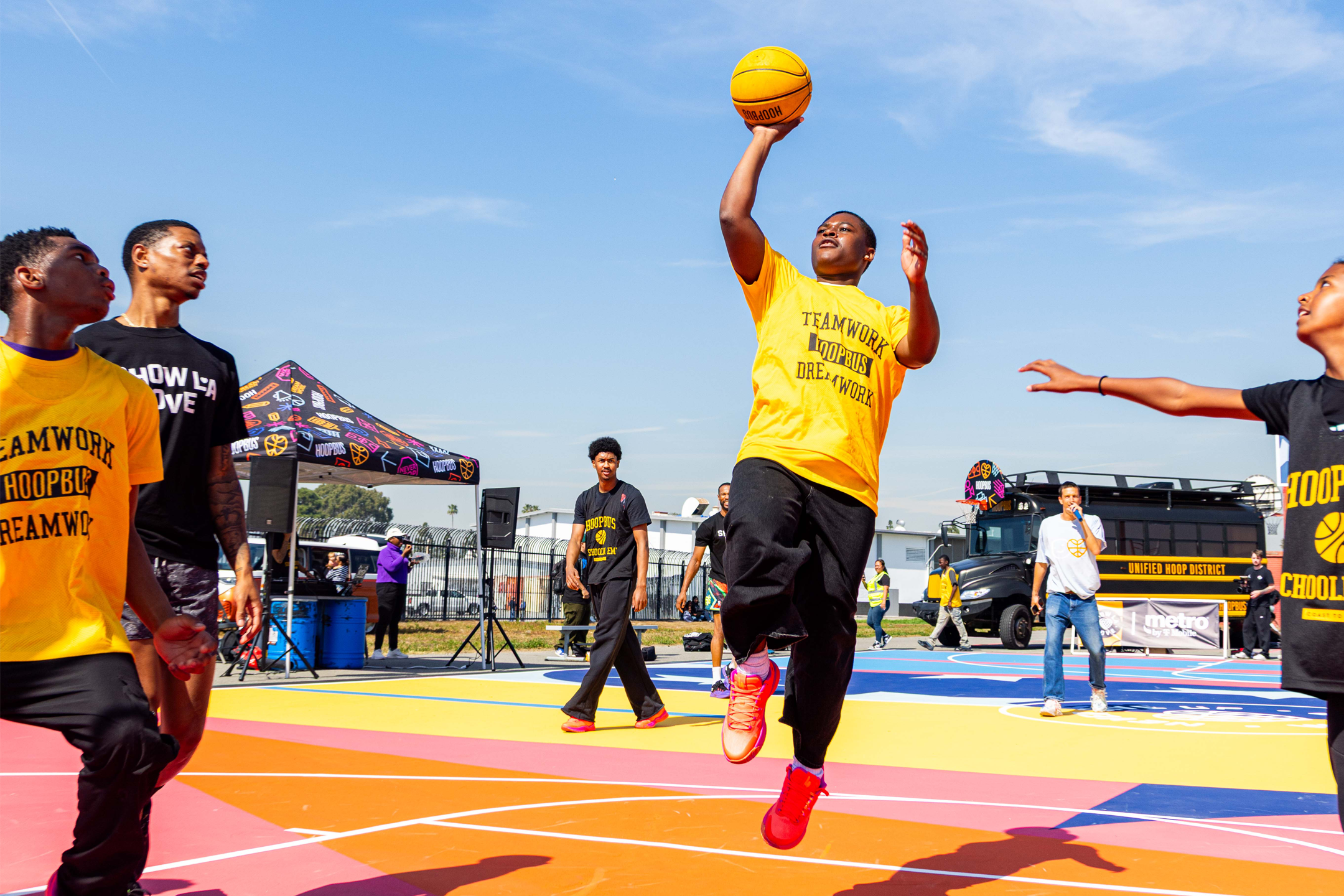
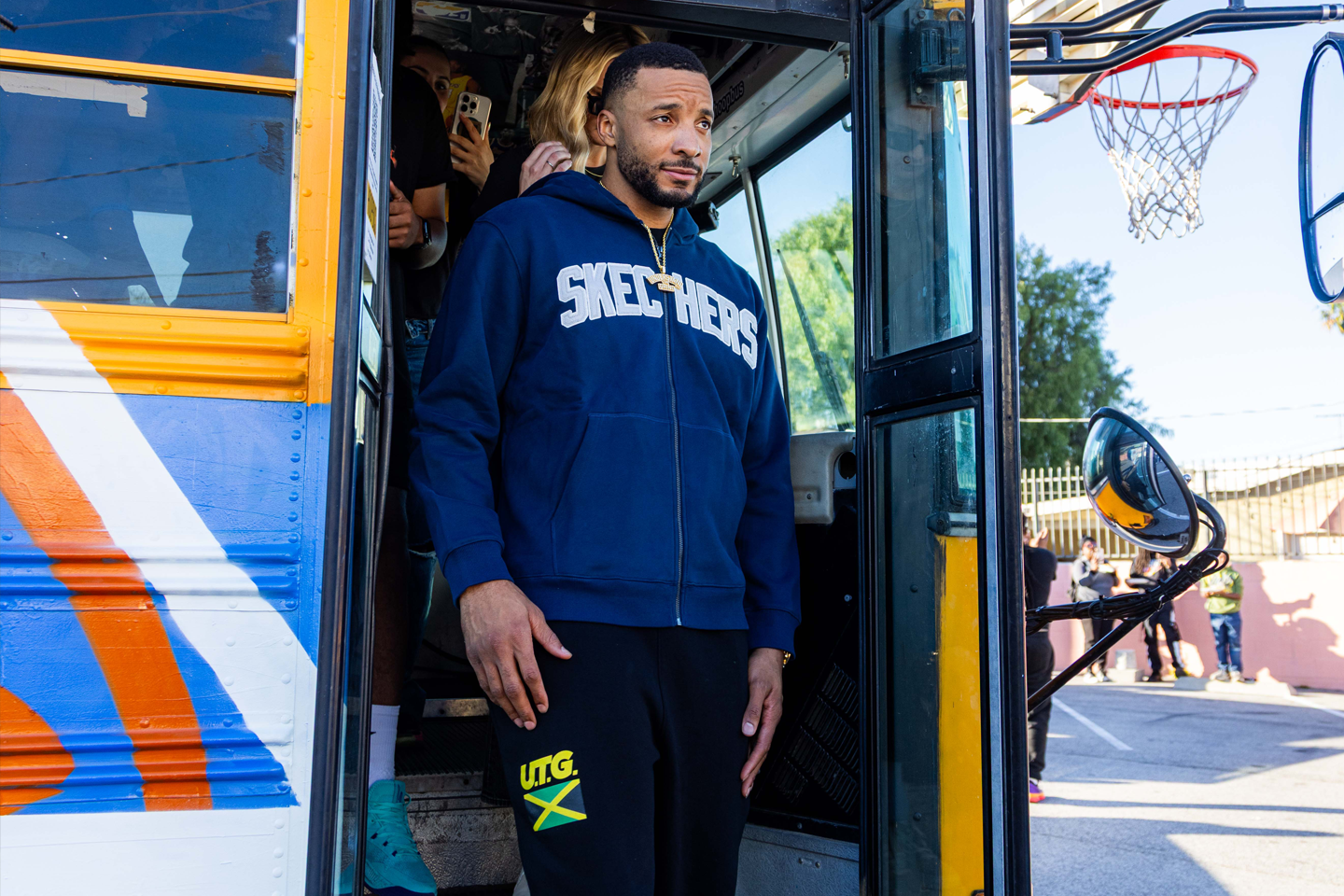
Show LA Love moved through the city as a series of activations, from school takeovers to public events and court openings.
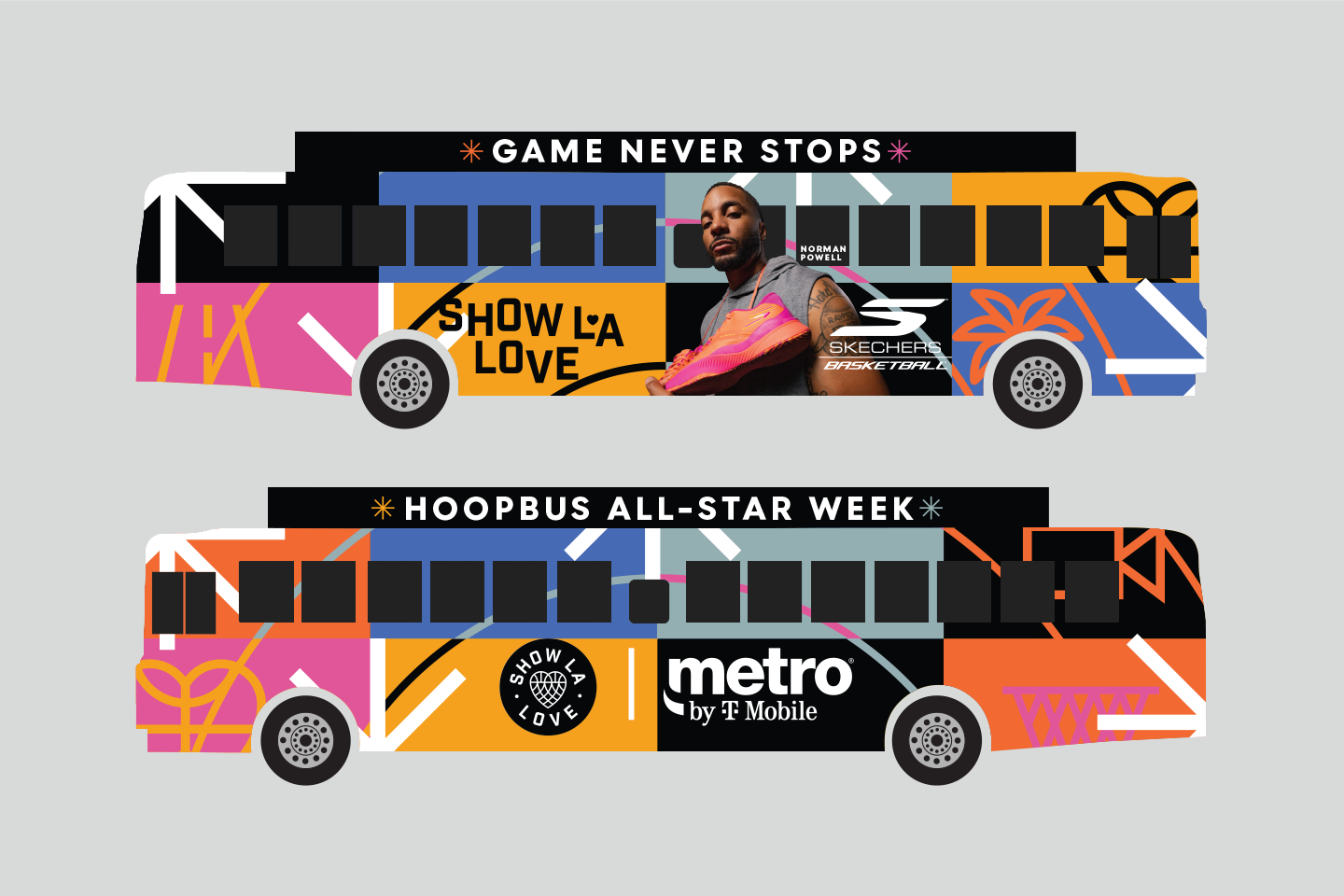
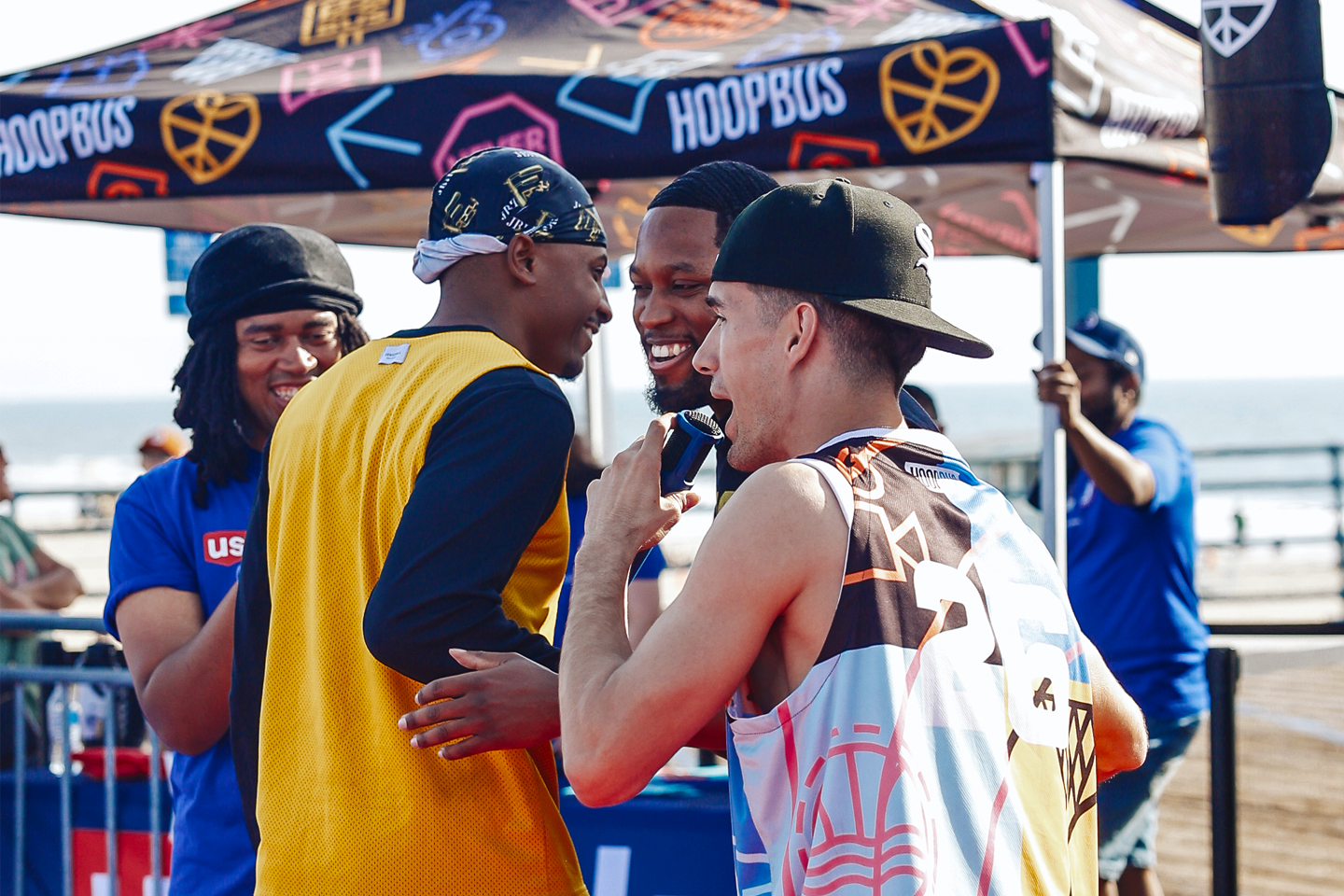
The identity was built to exist in motion, appearing across the bus, backboards, banners, apparel, and printed materials as the programming shifted from one location to the next. NBA players and special guests made appearances, adding to the energy of each event.
Rather than living in a single space, it carried through each moment, creating a consistent presence across environments throughout the city.
The Courts
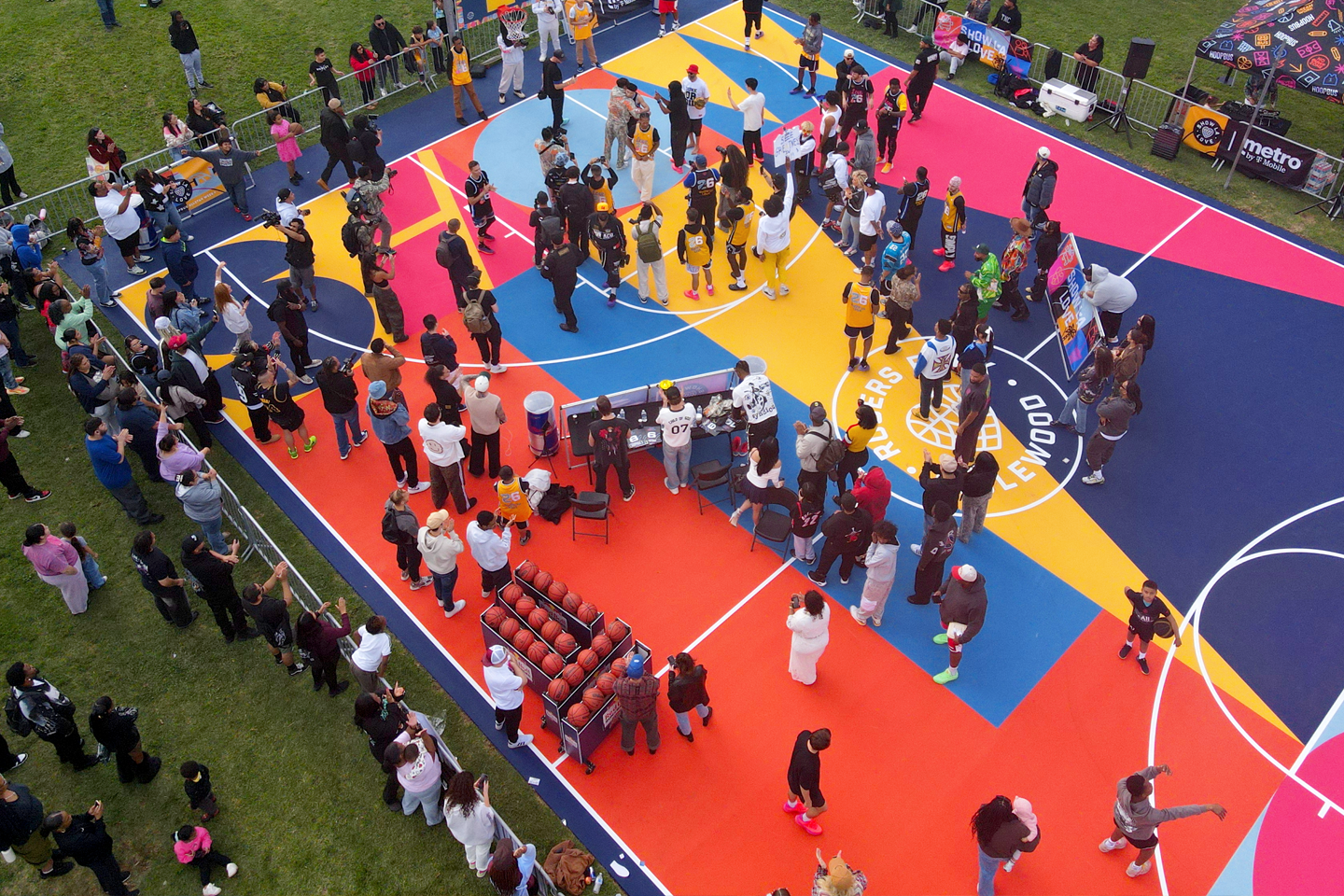
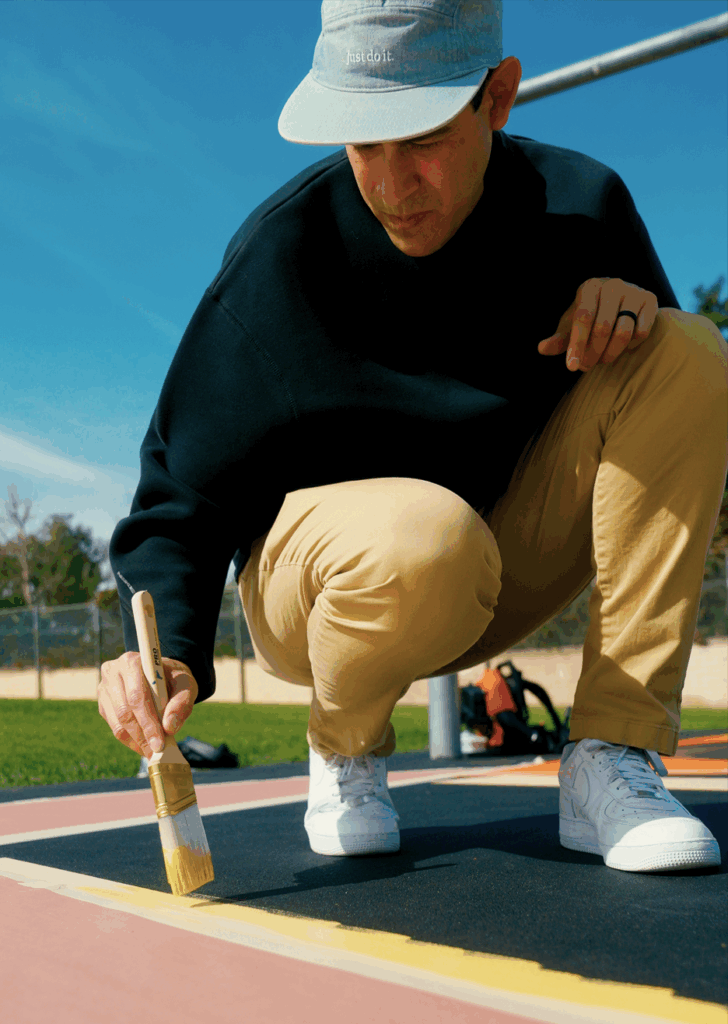
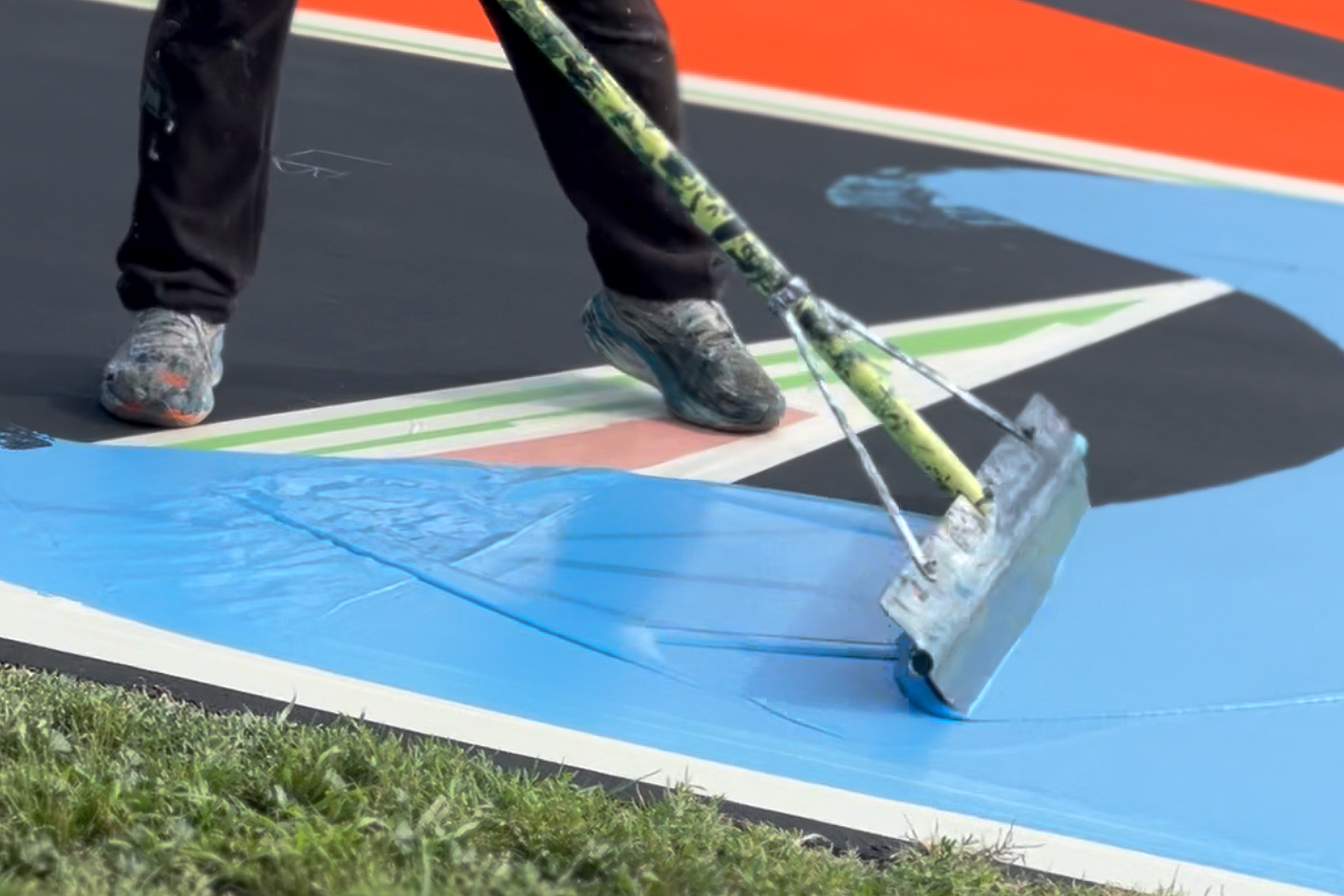
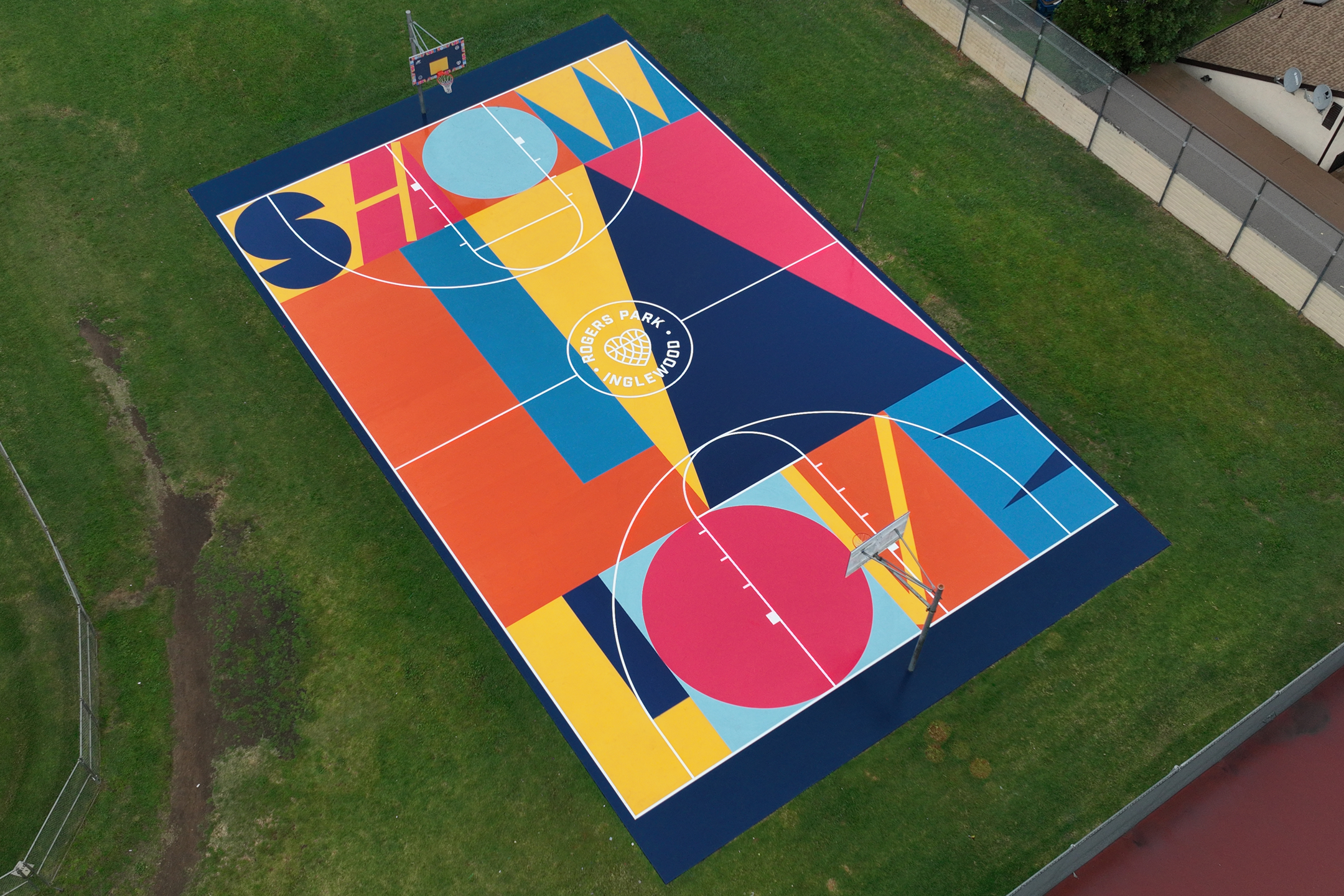
As part of the week’s programming, a series of courts across Los Angeles were refurbished, extending the work into physical space in a more permanent way.
At Rogers Park, a historic basketball site in Inglewood, the court design shifts into a more expressive, site-specific approach. Connected through color and language, the composition comes from my broader body of work—where surface, scale, and movement shape how the game is experienced on the ground.
Developed in collaboration with Project Backboard, the courts were installed as part of the week’s activations but designed to remain long after. Rogers Park serves as a central example, with additional courts, including Inglewood High School (formerly Morningside)—extending this work further into the community.

Built with Partners
Show LA Love brought together partners across public, private, and community spaces, each shaping how the work appeared across the city.
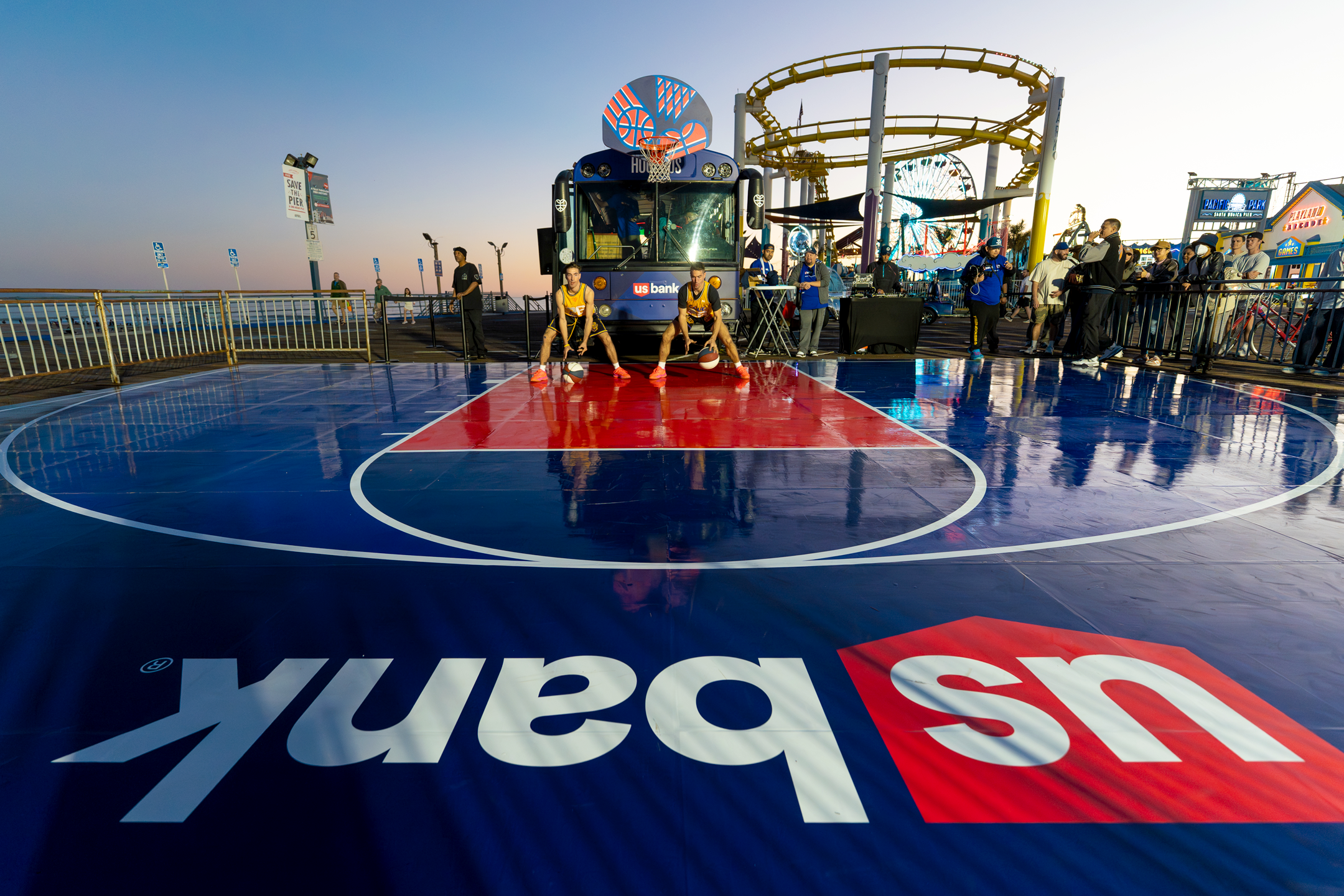
Some were integrated into the core system, with brands like Skechers and Metro by T-Mobile appearing across the bus, banners, and event materials. Others operated in parallel. US Bank extended into its own visual lane, with a dedicated court, apparel, and campaign materials.
Local and civic partners also played a role, including the City of Inglewood, where the Rogers Park court and its inauguration became a focal point within the week’s programming.
Rather than a single branded moment, the identity adapted across each partnership, maintaining a cohesive presence while allowing different collaborators to take shape within it.
Lasting Impact
What began as a week of programming extends beyond a single moment. Show LA Love demonstrates how a visual identity can move through a city—adapting across environments, partners, and communities while maintaining a clear point of view.
Through refurbished courts and public space, the work contributes to places that feel considered and built to be used. The result is not only a system in motion, but one that leaves a lasting presence within the communities it touches.