
Play is often treated as the opposite of serious work. It’s associated with childhood, distraction, or time away from what actually matters. But in creative practice, play is often where the real work begins.
Corita Kent described this overlap between work and play as “Plork.” Not as a joke, but as a way of understanding creative practice itself. The idea that experimentation, curiosity, movement, and participation are not distractions from meaningful work, but often the conditions that make it possible.
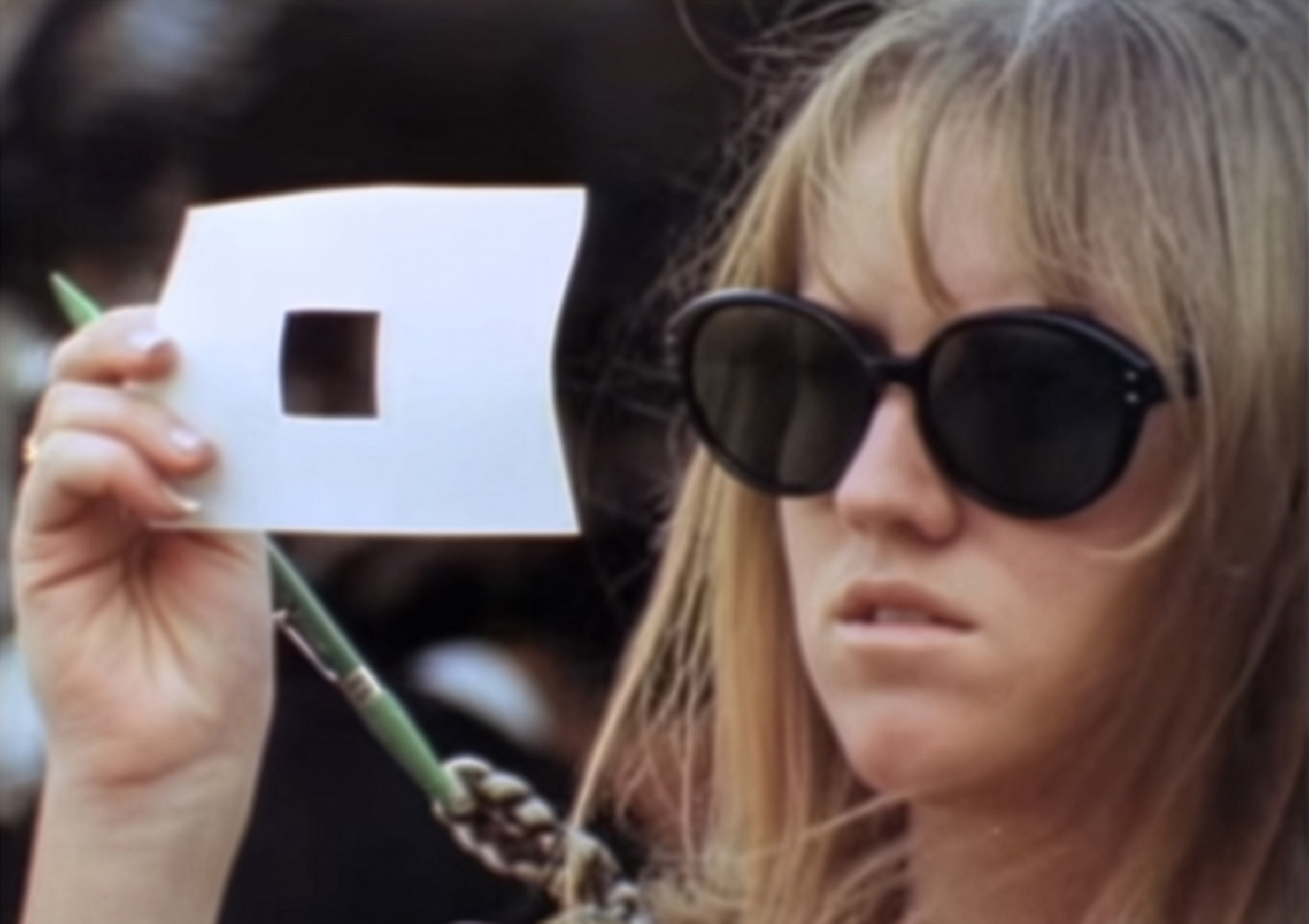
Photo courtesy of Corita Art Center
Fred Rogers spoke about play similarly, not as something trivial, but as serious learning. A way people test the world, build understanding, and develop relationships to their environment.
That understanding of play has shaped the way I approach design — creating systems and environments where observation, experimentation, and structured participation can lead to unexpected discoveries through the process itself.
Play Changes The Way We See
Play changes the way we observe the world. It interrupts habit and encourages people to notice things they would normally overlook.
During a year-long creative learning workshop I led with elementary school students at Aspire Public School in South LA, many of the exercises focused on perception rather than finished outcomes. Students used framing devices to isolate details in their surroundings, experimented with texture and abstraction, created prints and marks with vegetables, translated music into form, and created collective artworks that were reshaped as the work passed through the hands of their classmates.
The goal was not simply to teach students how to make images, but to help them become more aware of shape, texture, color, composition, and environment through direct experience.
Whether developing identity systems, public spaces, or visual experiments in the studio, play becomes a method for uncovering new ways of seeing and making.
Discovering Form Through Play
Play is also a way of discovering form through materials themselves. Sometimes an idea becomes clearer once it leaves the screen and enters physical space.
When Tokion Magazine invited me to guest art direct the cover in 2006 for their “Dynamite Issue,” I approached the concept literally — creating a sculptural garment made from hundreds of balloons. The piece used a material associated with popping, pressure, fragility, and anticipation to interpret the idea of an explosion through physical experimentation rather than direct illustration.
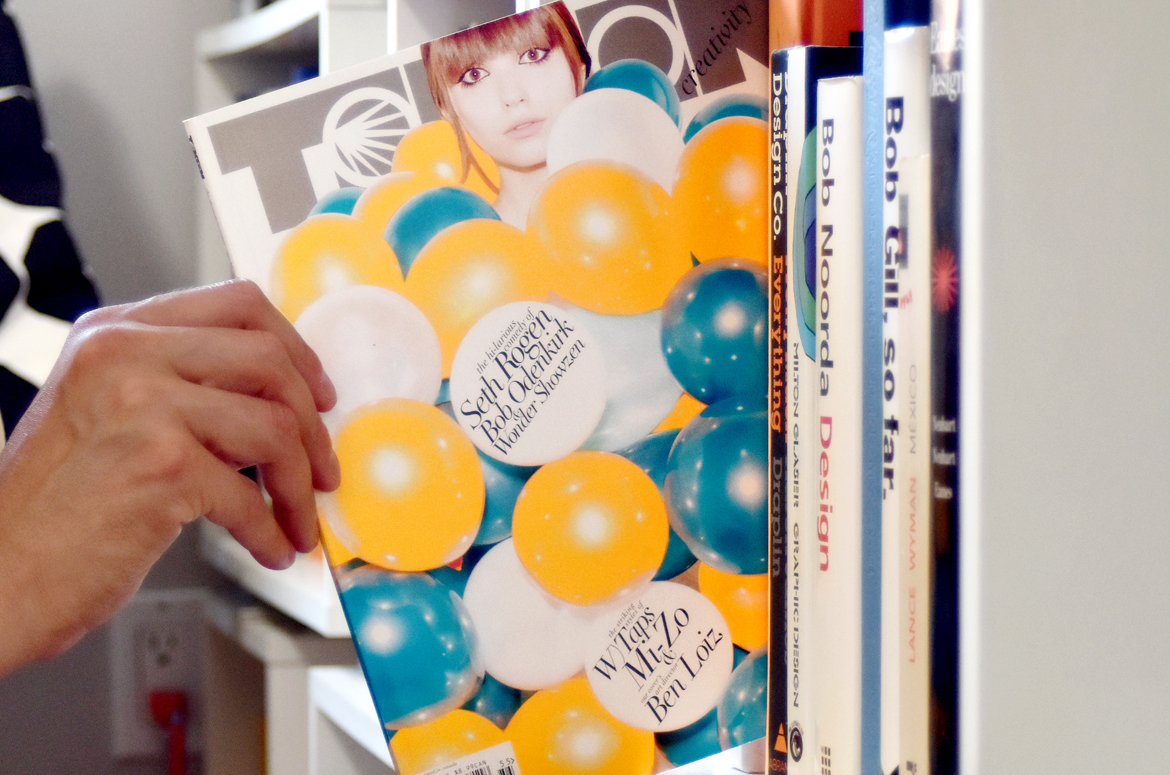
Whether using a paintbrush across the surface of a basketball court or building gestural marks into an identity system, form often emerges through movement, texture, rhythm, and material response rather than being solved entirely on screen. Some ideas can only be discovered through direct interaction with materials and the physical world itself.
Participation Needs Structure
Play is often associated with freedom and openness, but meaningful participation still requires structure. The role of the designer is not to disappear, but to create systems that allow people to contribute in focused and intentional ways.
In 2026, I led a creative lab with KIPP Compton students and Hoopbus around four themes: Gratitude, Teamwork, Discipline, and Self-Love. Students developed symbols, phrases, drawings, and visual ideas through timed exercises, group critiques, and collaborative prompts. Rather than treating participation as an unstructured brainstorm, the workshop created a framework for observation, editing, refinement, and collective decision-making.
The final mural was not a direct collage of student drawings. It was a translation of the energy, language, and visual patterns that emerged during the process into a cohesive public artwork. Community participation shaped the direction, but the work still required authorship, composition, hierarchy, restraint, and synthesis.
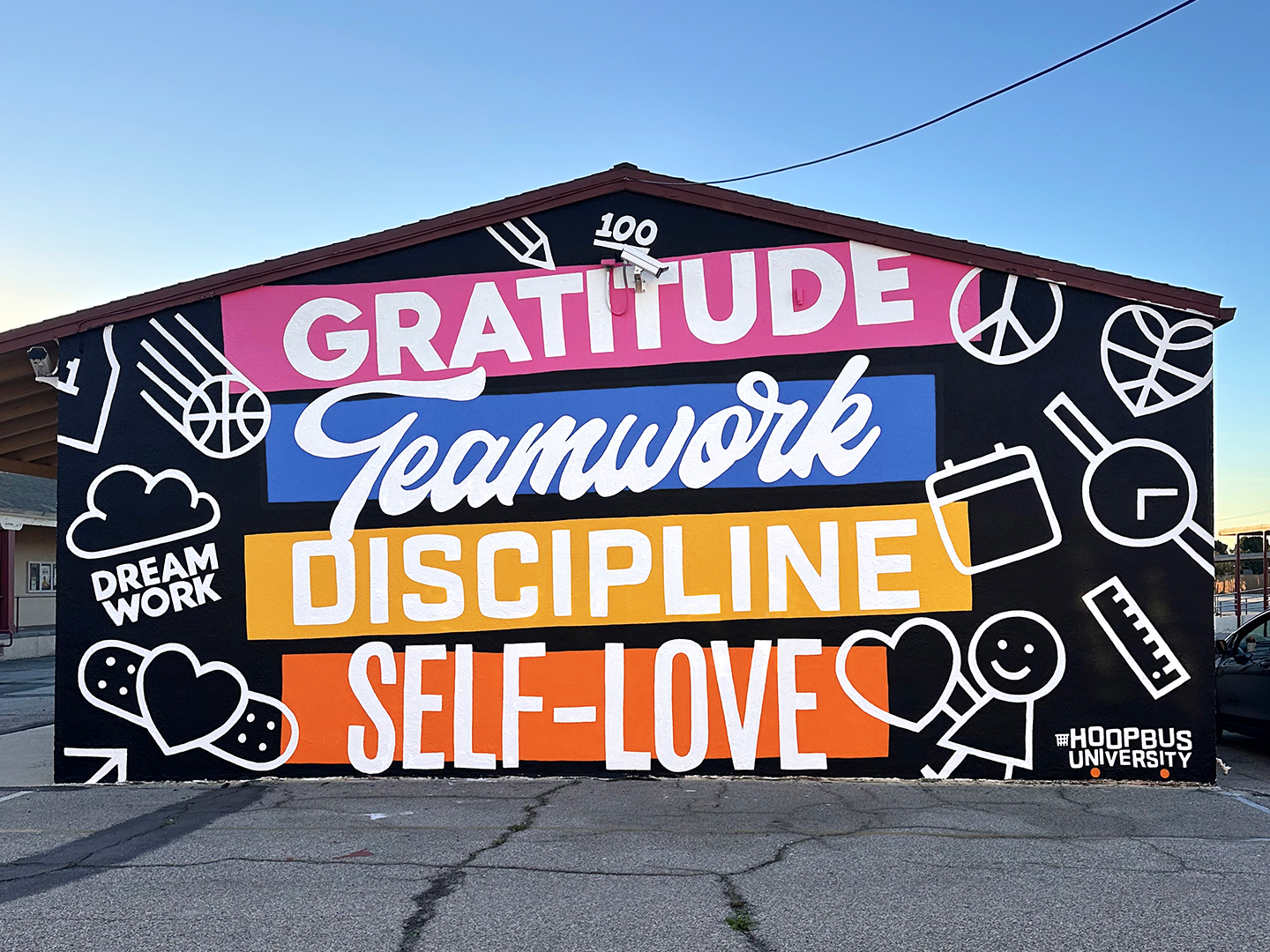
Play matters here because it creates conditions for unexpected ideas to emerge. The challenge is knowing how to shape that energy into something clear enough to live in public space long after the workshop ends.
Systems Activated Through Use
Play does not stop once something is finished. In many ways, the work only becomes complete once people begin interacting with it.
That idea continues through projects like HoopJeep, where courts, basketballs, jerseys, headbands, vehicles, and graphic systems are designed not as static objects, but as things meant to move through neighborhoods, events, and public space. Kids dribble across courts, shirts shift and wrinkle as people move, graphics travel across cities, and painted surfaces change through use. Even while painting a court, there is already a physical rhythm developing between the brush, the surface, and the environment itself.
In the HoopJeep case study, I wrote that “consistency comes not from repetition, but from rhythm.” That idea continues to shape the way I think about identity systems and public space. The strongest systems are not frozen or overly controlled. They adapt, respond, and come alive through movement, participation, and interaction with people over time.
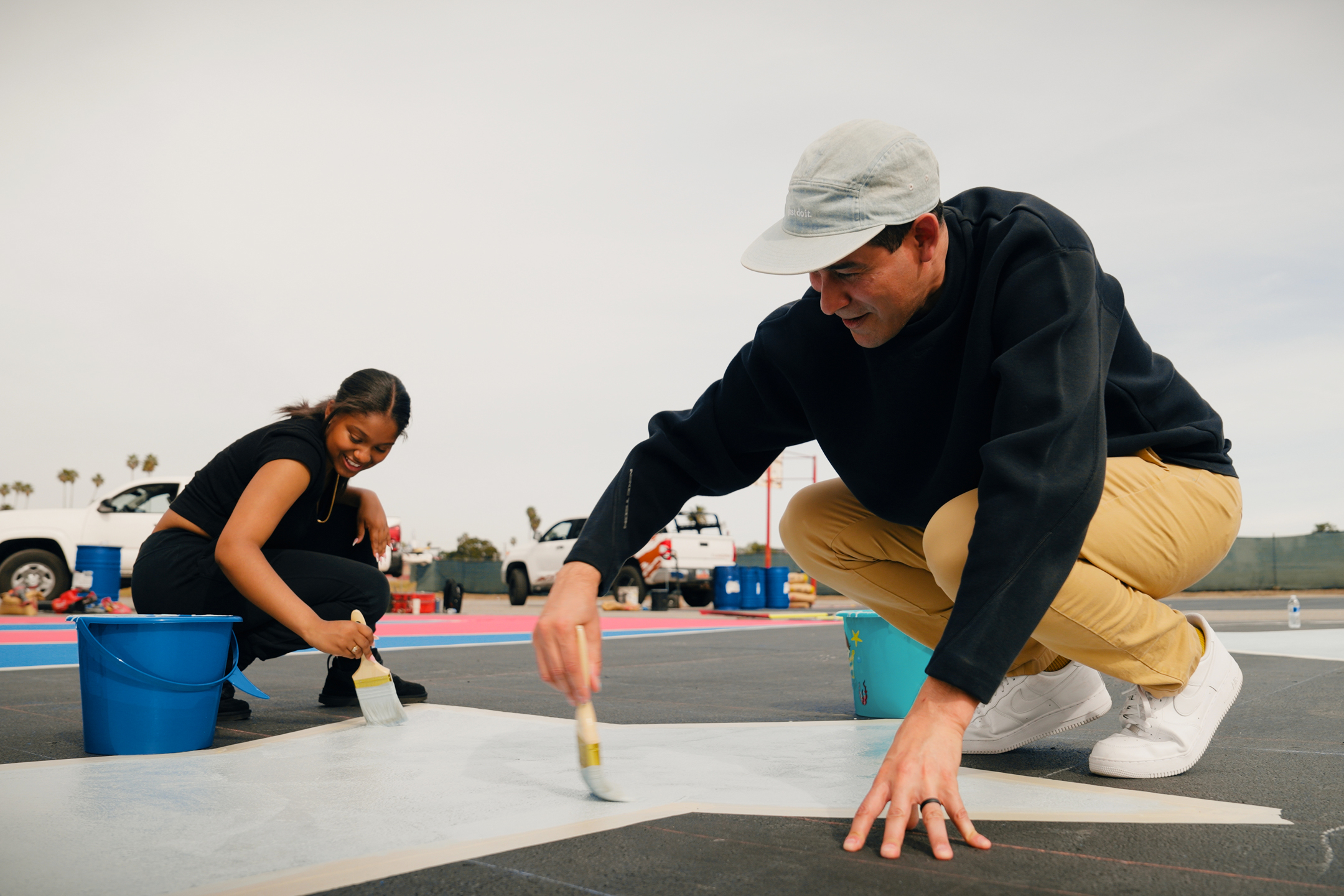
Play is often misunderstood as the opposite of serious work, but throughout my practice it has become a way of testing ideas, discovering form, shaping participation, and building systems that can adapt over time.
I’ve become less interested in repetition and more interested in rhythm — creating work that responds to movement, interaction, and the unpredictability of real life. Whether through workshops, branding, or public space, the goal is not to create something static, but systems that come alive through use.
If these ideas resonate with your work or way of seeing, I’d love to hear from you.